
Live Resin Cartridge Filling Temperature: Protect Terpenes Without Sacrificing Fill Accuracy
Live resin is easier to meter when it is warm, but every additional degree also increases the exposure of its volatile aroma fraction. The practical goal is therefore not to find the hottest setting that makes the oil flow. It is to identify the lowest stable product temperature at which the filling system can deliver repeatable doses without nozzle starvation, stringing, or trapped air.
This guide explains how to establish that operating window, what to measure during a trial, and which machine settings matter beyond the heater setpoint.
Key Takeaways
- There is no universal best temperature for every live resin formulation. Composition, decarboxylation, cartridge geometry, dose size, and the machine's fluid path all change the result.
- A useful development range is approximately 45–55°C (113–131°F), but it should be treated as a trial window—not a specification for every oil.
- Measure the oil itself, not only the reservoir or controller setpoint. A cold hose or nozzle can make a warm tank behave like an underheated process.
- Accuracy should be verified by repeated check-weighing after the full fluid path reaches equilibrium.
What Is the Best Live Resin Cartridge Filling Temperature?
The best live resin cartridge filling temperature is the lowest product temperature that produces clean, repeatable dosing in the actual machine and cartridge combination. For many formulations, a 45–55°C trial window is a reasonable place to begin, but the final validated setting may fall outside it.
That distinction matters. A heater display reports a control target, while filling performance depends on the temperature and viscosity of the resin at the point of dispensing. A reservoir at 50°C can feed a cooler hose and nozzle, causing slow recovery between shots. Conversely, a nozzle that is much hotter than the bulk oil can create local thinning, dripping, or inconsistent cut-off.
Competitor guidance often reduces the answer to a single number. In production, a better answer is an operating window defined by four pass conditions: the resin reaches the target dose, the weight variation remains acceptable, the nozzle cuts off cleanly, and the cartridge fills without excessive bubbles or flooding.
Why Lower Temperatures Help Protect Terpenes
Lower temperature and shorter hot-hold time generally reduce unnecessary thermal exposure. This is especially relevant to live resin because its sensory value is closely connected to a complex mixture of volatile compounds rather than only to its cannabinoid content.
Temperature alone is not the entire exposure. Time, oxygen contact, surface area, agitation, and repeated reheating also matter. Holding a large reservoir warm for an entire shift can create more cumulative exposure than conditioning a smaller working quantity and filling it promptly. For that reason, a terpene-preserving filling process should control both temperature and dwell time.
Do not use aroma as the only quality check. If product quality claims are important, compare retained samples from the approved process with appropriate analytical and sensory methods. The filling machine can control process conditions, but it cannot prove terpene retention by itself.
Why Filling Too Cold Reduces Accuracy
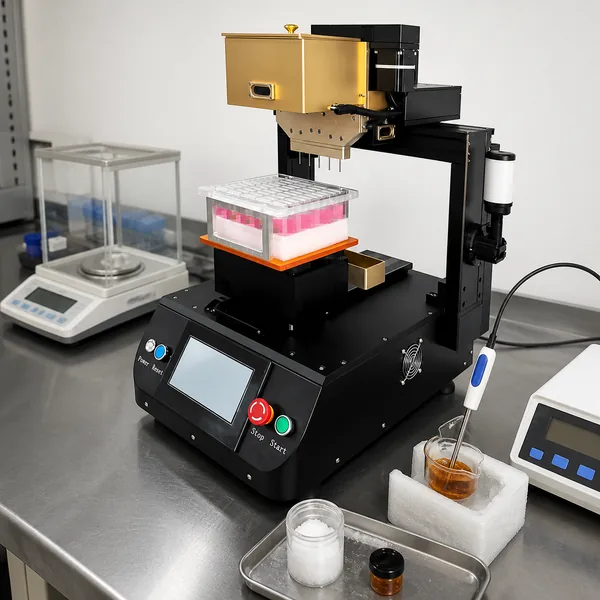
When live resin is too cold for the selected pump and nozzle, flow resistance rises. The machine may still complete a cycle, but the dose can recover slowly, break into strings, or arrive with trapped air. These symptoms create the appearance of a calibration problem even when the programmed volume has not changed.
Common signs of an underheated process
- the first cartridges fill correctly but later shots become light;
- the pump hesitates or the pressure increases;
- resin strings between the nozzle and cartridge;
- the nozzle partially clogs after a pause;
- microbubbles appear after cold material enters the line;
- fill weight improves temporarily when the operator slows the cycle.
If slowing the cycle improves dose weight, the system may need more recovery time, a more uniform fluid-path temperature, a different nozzle, or a warmer—but still controlled—product temperature. Increasing heat should not be the automatic first response.
Why Filling Too Hot Can Also Hurt Accuracy
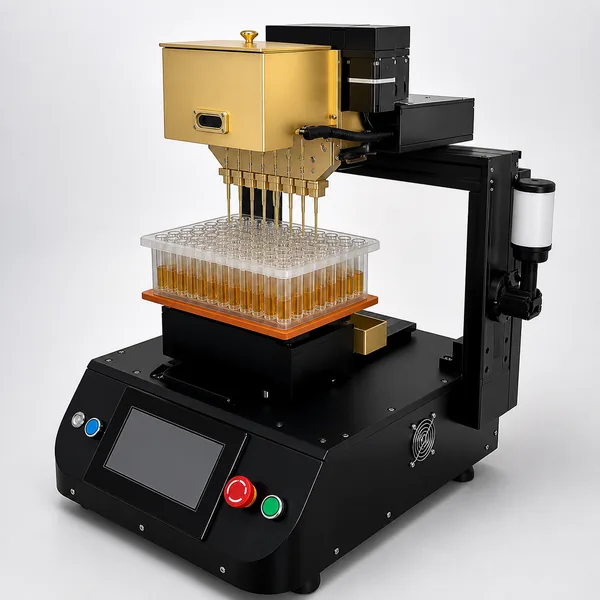
Overheating may make the resin easy to move, but it can introduce a different set of problems. A very thin product can drip after shutoff, flow into the center airway, or continue moving while the cartridge is being handled. Hot resin also contracts as it cools, changing the visible fill line and potentially increasing the importance of the capping sequence.
Excess heat may also increase aroma loss, color change, and oxidation risk. The correct process therefore balances flow against exposure; it does not maximize fluidity. If the only way a machine can fill is by using an unnecessarily high temperature, review the pump, line length, nozzle diameter, insulation, and cycle speed before raising the setpoint again.
Use Product Temperature, Not Just Heater Setpoint
A low temperature cartridge filling process works only when the complete wetted path is controlled. Operators should distinguish among reservoir temperature, hose or pump temperature, nozzle temperature, cartridge temperature, and the actual resin temperature.
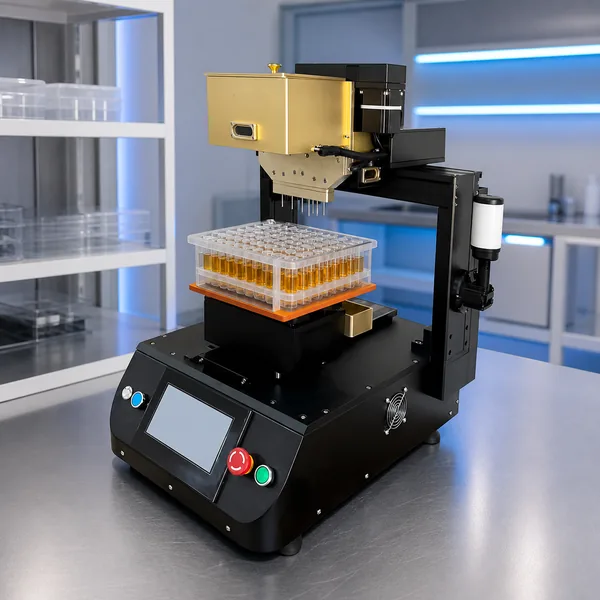
Longwill Machinery's automatic cartridge filling machines offer adjustable heating systems for oils with different viscosities. Model specifications show broad controller ranges, but those ranges are equipment capabilities—not recommended live resin recipes. The validated resin temperature must come from trials with the customer's own formulation and hardware.
Before recording results, allow the reservoir, pump, hose, and nozzle to reach a stable condition. Then verify the oil temperature with a suitable calibrated method at a representative point. Avoid assuming that a controller set to 50°C means the resin exits at exactly 50°C.
A Practical Low-Temperature Calibration Method
Start with the formulation supplier's handling limits and the cartridge manufacturer's filling instructions. Within those boundaries, use a structured trial rather than adjusting several variables at once.
- Define acceptance criteria. Set the target net weight, allowable tolerance, bubble limit, visual fill requirement, and maximum permitted product temperature.
- Condition a small batch. Use only enough resin for the trial so the entire production batch is not exposed to repeated heating.
- Stabilize the fluid path. Bring the tank, pump, hose, and nozzle to equilibrium and purge the line according to the machine procedure.
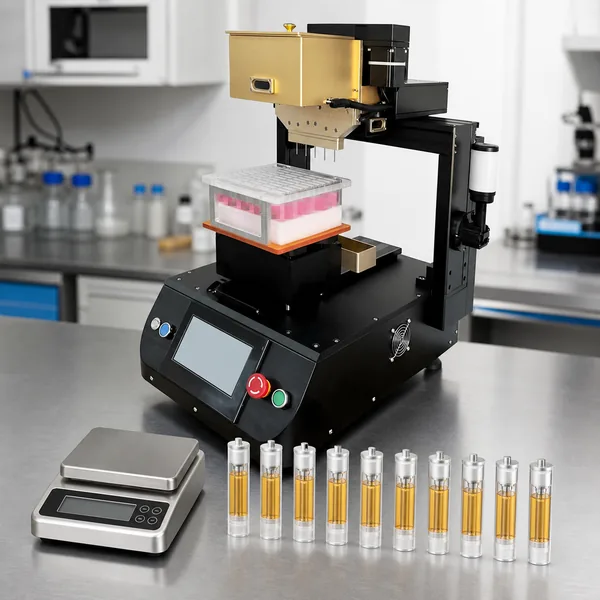
- Run and weigh a sequence. Weigh at least 10 consecutive units after startup. Include the first unit after a planned pause because restart behavior often reveals cooling at the nozzle.
- Change one variable. If doses are light or the nozzle strings, first adjust cycle speed, recovery time, or cut-off. Raise product temperature in small increments only when the evidence points to excessive viscosity.
- Repeat after a dwell period. A setting that works for five minutes may drift during a long run. Recheck temperature and weight after the system has operated at steady state.
- Lock the recipe. Record the formulation identifier, lot, temperature at the product, pump or pressure setting, dose, nozzle, cycle speed, warm-up time, and results.
For more detail on matching equipment to viscosity, automation level, and cartridge format, see Longwill Machinery's guide to buying vape cartridge filling machines.
Settings That Matter as Much as Temperature
Temperature is only one control variable. The best temperature for filling live resin carts can change when any of the following settings changes.
Pump or pressure setting
The dosing mechanism must move the conditioned resin without compressing air or creating excessive shear. Time-based systems are especially sensitive to viscosity drift, while volumetric systems still require a fully supplied inlet and consistent cut-off.
Nozzle diameter and heated length
A narrow or unheated nozzle can become the coldest and most restrictive part of the line. A larger nozzle may improve flow, but it must still fit the cartridge opening and avoid the center airway. Select the nozzle with the actual cartridge, not in isolation.
Cycle speed and recovery time
High throughput is not useful if the pump cannot refill consistently between shots. Compare the first shot, consecutive shots, and restart shot after a pause. If only continuous high-speed operation fails, recovery time is a stronger suspect than the programmed dose.
Cartridge preconditioning
A cold cartridge can cool resin immediately at the inlet and trap bubbles along the wall. Any cartridge warming must remain within the hardware supplier's limits and should be controlled, uniform, and documented.
How to Diagnose Bubbles Without Overheating the Resin
Bubbles do not automatically mean the reservoir temperature is too low. They can come from air entering a fitting, incomplete priming, cold spots, agitation, rapid transfer, or an unsuitable nozzle position.
Begin by checking the material path for air leaks and confirming that the pump inlet remains fully supplied. Prime slowly, keep the nozzle near the intended fill position without blocking the cartridge airway, and avoid whipping air into the resin during conditioning. If bubbles appear mainly after a pause, inspect nozzle cooling and restart settings. If they appear continuously, inspect the inlet, seals, and transfer method.
Community discussions repeatedly connect cold syringes and cartridges with bubble formation, but those reports are useful as problem signals rather than validated specifications. Production settings should be established with controlled trials and recorded measurements.
Choosing a Live Resin Filling Machine
A suitable live resin filling machine should give the operator control over the entire material path, not merely provide a hot reservoir. Evaluate independent heating zones, the distance from tank to nozzle, temperature sensor location, dose repeatability at the intended viscosity, restart behavior, cleanability, and the ability to store validated recipes.
For pilot batches or frequent formulation changes, a semi-automatic cartridge filling machine can provide more operator control. For higher throughput, automatic equipment can reduce handling variation, provided that the resin, cartridge, nozzle, and process settings have already been validated.
Ask the supplier to test with representative material or a rheologically similar approved substitute. A useful test should show consecutive fill weights, the actual oil temperature, the cycle rate, the nozzle condition, and the restart result after a pause. A broad controller range alone does not demonstrate low-temperature filling performance.
Frequently Asked Questions
Can live resin be filled below 45°C?
Yes, if the specific formulation and filling system can deliver repeatable doses at that temperature. Some terpene-rich formulations flow at lower temperatures, while thicker products may require a warmer path, slower cycle, or different nozzle. Validate with actual product temperature and check weights.
Should the reservoir and nozzle use the same setpoint?
Not necessarily. Heat loss differs across the system, so identical controller settings may not produce identical product temperatures. The objective is a stable resin temperature and consistent viscosity throughout the wetted path, without creating a hot spot at the nozzle.
How often should fill accuracy be checked?
Check during setup, after the fluid path reaches equilibrium, after meaningful pauses or parameter changes, and at defined intervals during the run. The interval should reflect process risk, batch size, equipment capability, and applicable quality requirements.
Does a higher heater range mean a machine is better for live resin?
No. A high maximum temperature shows capability, not suitability. For terpene-preserving filling, stable low-temperature control, short and uniformly heated paths, clean cut-off, and repeatable dosing are more relevant than the maximum heater setting.
Build a Repeatable Temperature Window
Protecting terpenes without sacrificing fill accuracy requires a controlled window rather than a universal number. Start conservatively, measure the resin itself, stabilize the whole fluid path, and use check-weighing to confirm performance. If a process fails at low temperature, diagnose recovery time, nozzle restriction, air entry, and heat loss before simply turning up the heater.
Longwill Machinery can help evaluate automatic or semi-automatic configurations against the customer's oil behavior, cartridge geometry, batch size, and target output. The most useful equipment discussion begins with representative material data and a defined acceptance test—not only a requested temperature.