
How to Reduce Cone Loading Bottlenecks in Pre-Roll Production
A pre-roll filling machine may complete its filling cycle quickly, yet still spend time waiting for the next tray of empty cones. The delay often happens before any material enters the paper: operators must separate the cones, place them into the correct openings, check their positions, and prepare the tray for filling.
For pre-roll manufacturers, cone loading is a production step worth examining separately from the filling process. Improving it does not necessarily require a faster filling machine. Better tray preparation, suitable cone dimensions, and a more organized loading sequence may address the immediate problem.
The issue is widely recognized in the industry. In the 2026 State of the Pre-Roll Market Report, 24.4% of surveyed producers identified cone loading as their most time-consuming production step, tied with twisting and folding. [1]
This guide looks at where loading delays occur, how to distinguish them from filling problems, and what manufacturers should consider before investing in additional equipment.
Why Does Cone Loading Slow Down Pre-Roll Production?
Cone filling and cone loading are two different operations.
Filling equipment distributes material into prepared cones, while loading involves placing empty paper cones into a tray or holding fixture in the correct position. Even when filling is automated, the equipment may still depend on operators to prepare the next batch.
The challenge is especially noticeable when empty cones must be positioned individually.
Paper cones are lightweight and tapered. Their openings need to remain accessible, and the lower sections must sit correctly in the holding tray. A folded, damaged, or poorly positioned cone may require adjustment before the filling process begins.
The time spent on these tasks can interrupt the rhythm of production.
Imagine a workstation where the filling cycle is complete, but the next tray has not been prepared. The machine cannot begin another batch simply because the filling mechanism is ready. It must wait for correctly loaded cones.
The delay is not necessarily caused by inadequate filling capacity. It may result from how the loading work is organized.
This distinction matters because replacing a filling machine will not automatically solve a problem that occurs before the machine begins filling.
What Happens Before a Cone Filling Machine Starts Filling?
Understanding the loading sequence makes it easier to identify avoidable work.
Longwill's K1 Pre-Roll Cone Filling Machine provides a useful example because its workflow separates cone preparation, flower filling, and closing into identifiable steps.
The K1 uses a two-part paper-cone holding tray. The lower section is positioned on the equipment, empty cones are placed into it, and the upper section is then fitted over the loaded tray.
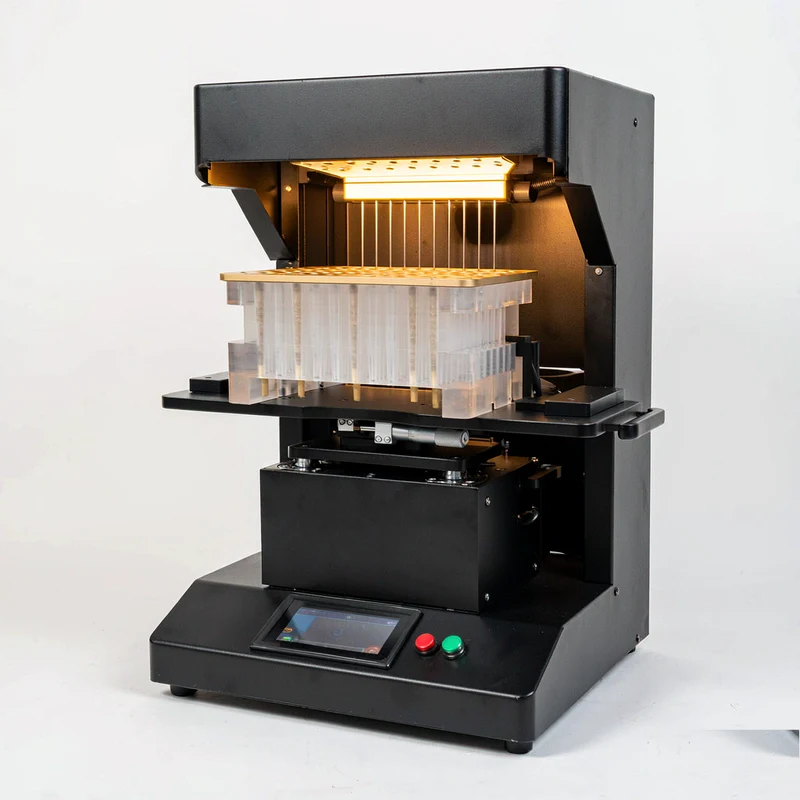
This arrangement holds the paper cones in position for the subsequent filling operation.
Once the cones are prepared, the flower filling tray and metal board are arranged above the holding tray. Material is introduced through the filling stage, after which the tray assembly moves through the remaining filling and closing steps. [2]
The important point is that preparing the cone tray is a distinct operation from the machine's filling cycle.
Why the Two-Part Cone Tray Matters
The lower part of the K1 tray supports the empty cones, while the upper part helps establish the tray assembly used for filling.
Because the loading and filling stages rely on the same holding arrangement, correctly positioning the cones before assembling the tray matters.
A cone that does not sit properly may interfere with subsequent handling or require the operator to reopen and adjust the tray.
The two-part design illustrates why tray preparation and positioning are important parts of cone-filling equipment operation.
For buyers evaluating a pre-roll filling machine, this distinction is useful: automatic or machine-assisted filling does not necessarily mean automatic cone loading.
Where Does Cone Loading Time Actually Go?
Loading delays are not always caused by the speed at which an operator can pick up and place a cone.
The preparation process includes several small tasks, and problems in one can affect the next.
Cone Separation and Placement
Empty pre-rolled cones may arrive nested or grouped together. Before placement, the operator must separate them without damaging the paper or deforming the open end.
Each cone then needs to be positioned in the tray opening.
If the cone folds, catches on the tray edge, or does not reach the intended position, the operator must correct it.
These interruptions may appear minor individually, but they become part of every tray preparation cycle.

The practical improvement is to make sure the loading station gives operators suitable access to empty cones and the holding tray, without unnecessary movements between the supply area and the machine.

Tray Preparation and Exchange
Loading time also includes preparing the tray before filling and moving it through the equipment's required operating sequence.
In the K1 workflow, the lower tray is loaded with cones and then combined with the upper tray section. After filling, the tray components are handled again as the product moves toward closing. [2]
These operations should be considered when planning the workstation.
For example, if an operator must repeatedly move between a distant cone supply area and the machine, the workstation arrangement may introduce unnecessary handling.
Likewise, if the next tray cannot be prepared until the previous tray has completed its cycle, loading becomes closely tied to the machine's availability.
Manufacturers should review which preparation steps can occur separately without interfering with safe equipment operation.
Cone Size and Tray Fit
Not all paper cones have the same dimensions.
Nominal cone length is only one part of compatibility. Base diameter, taper, filter-tip dimensions, and the shape of the open end can also affect how a cone sits in a tray.
A tray designed for one cone format may not position another format correctly.
Using the wrong holding arrangement can create repeated loading adjustments or unstable positioning.

Before purchasing a cone filler machine, manufacturers should therefore confirm which cone dimensions the supplied tray supports and whether alternative trays are available for their intended products.
This is particularly important for OEM producers handling several cone specifications.
How Can Manufacturers Reduce Cone Loading Delays?
The most practical improvements begin with the loading operation itself.
Manufacturers do not need to assume that every loading problem requires a dedicated automatic cone loader. In many cases, the first priority is to remove avoidable handling and establish a consistent tray preparation method.
Prepare the Loading Station Around the Tray
Operators should be able to access empty cones, the holding tray, and the required tray components without unnecessary movement.
A clearly organized loading area also makes it easier to identify cones that are bent, damaged, or unsuitable for the current tray.
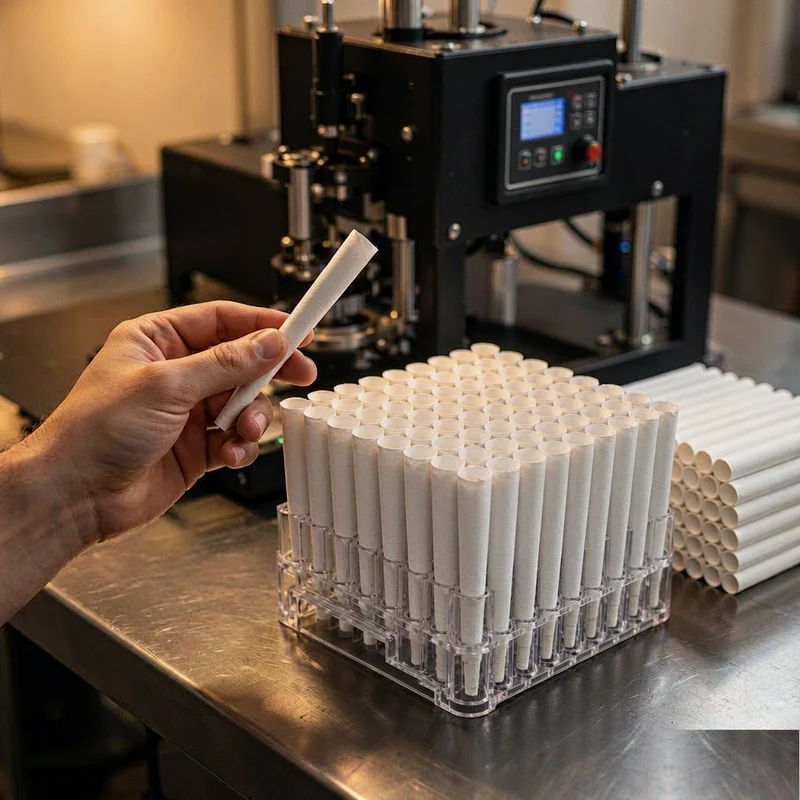
Where the equipment and operating procedure permit, manufacturers can examine whether cone preparation can take place away from the main filling position.
This allows the loading task to be considered independently rather than treating it as an unavoidable part of the filling cycle.
Any proposed workstation change must account for machine clearance, operator safety, and the manufacturer's operating procedure.
Match the Tray to the Actual Cone
Before changing the loading method, confirm that the tray fits the intended cone.
This means examining more than the advertised paper length.
A suitable tray must support the cone in the correct orientation and maintain the positioning required for filling.
Longwill's K1 uses a dedicated paper-cone holding tray as part of its filling arrangement. When evaluating K1 for a particular cone format, the dimensions of the cone and the corresponding tray configuration should be reviewed together.
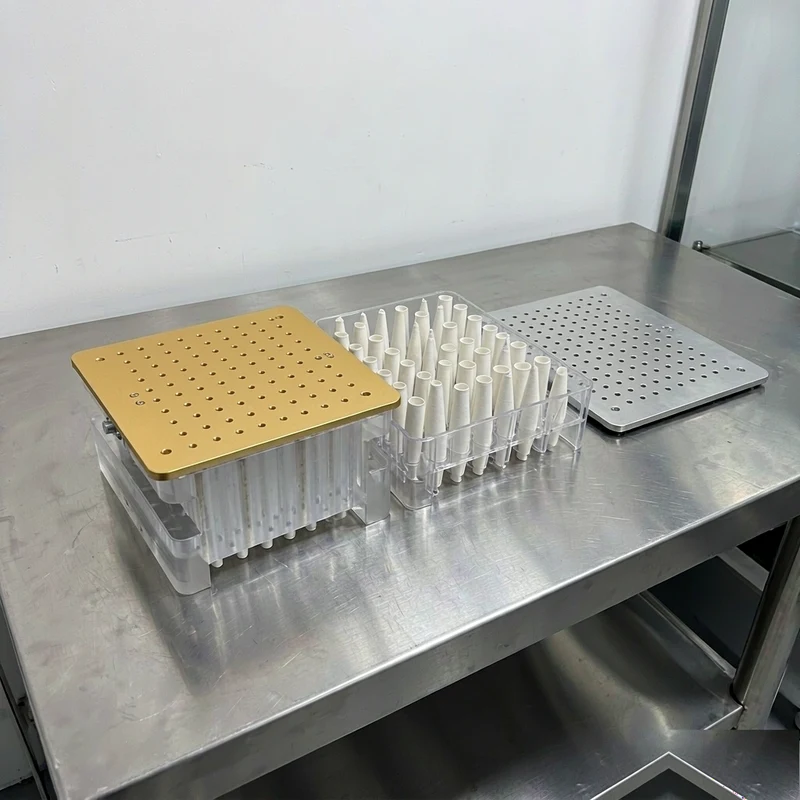
If a manufacturer produces more than one cone size, the question becomes whether the same tray can be used or whether the setup requires alternative components.
Correct tray selection can eliminate some positioning problems before they become recurring production interruptions.
Separate Loading Problems From Filling Problems
When a production cycle takes longer than expected, it helps to identify where the time is being spent.
Is the operator still placing cones into the tray? Is the tray ready but waiting for the machine? Or has the filling operation already finished while the next production step remains incomplete?
These are different situations.
A simple observation of several normal production cycles can show whether delays occur during cone placement, tray exchange, filling, or subsequent handling.
For example, if a tray is repeatedly ready before the filling cycle finishes, cone loading may not be the immediate limitation.
If the filling machine regularly waits for an empty-cone tray, loading deserves closer attention.
This approach helps manufacturers avoid spending money on a solution that addresses the wrong step.
When Is an Automatic Cone Loader Worth Considering?
An automatic cone loader and an automatic cone filling machine perform different functions.
A cone loader is intended to reduce or automate the placement of empty cones into a holding arrangement. A cone filling machine handles the subsequent filling process, although the level of automation varies among models.
Some systems combine these functions, while others depend on manual cone loading.
An automatic cone loader may be worth evaluating when cone placement remains a recurring limitation after the workstation, tray compatibility, and loading procedure have been reviewed.
The decision also depends on how standardized production is.
A facility repeatedly using one cone format may find it easier to justify a dedicated loading arrangement. A manufacturer working with frequently changing cone dimensions may need greater flexibility and additional change parts.
| Loading arrangement | Potential advantage | Main consideration |
|---|---|---|
| Manual cone loading | Direct operator control and straightforward setup | Individual placement remains labor-dependent |
| Prepared cone trays | Allows tray preparation to be organized separately where supported | Requires compatible trays and suitable handling procedures |
| Dedicated automatic cone loader | Automates or assists empty-cone placement | Must match cone dimensions and the receiving tray or equipment |
| Integrated loading and filling system | Coordinates multiple operations in one arrangement | Requires verification of the complete hardware and process configuration |
A dedicated loader should not be selected solely because the filling machine has a high rated capacity.
Its usefulness depends on whether cone placement is actually delaying production and whether the loader works with the chosen filling system.
For Longwill K1, the documented process includes manual placement of empty cones into the holding tray. Buyers seeking automatic cone placement should discuss that requirement separately rather than assuming it is included with the filling function. [2]
What Should You Check Before Choosing a Pre-Roll Filling Setup?
A manufacturer purchasing pre-roll equipment should evaluate the complete tray and cone-handling arrangement, not only the filling mechanism.
The first consideration is the cone specification. Actual samples or dimensional drawings help establish whether the holding tray is suitable for the intended paper format.
The second is the loading method. Buyers should establish whether empty cones are positioned manually, prepared in removable trays, or supplied by a separate loading mechanism.
Next comes the relationship between loading and filling. A machine may handle a batch of cones efficiently once they are positioned, but its practical workflow still depends on how those cones are prepared.
Longwill's K1 combines a paper-cone holding tray, flower filling tray, metal board, and closing components within a defined operating sequence. This makes it useful to review the entire tray-handling procedure when evaluating the machine for a production application.
Finally, consider the range of products the facility intends to make. Different cone dimensions or changes in production requirements may affect tray selection and workstation organization.
These details give the equipment supplier a clearer basis for discussing an appropriate configuration.
Frequently Asked Questions
Does an automatic cone filling machine automatically load empty cones?
Not necessarily. Automatic cone filling refers to the filling operation, while automatic cone loading involves placing empty paper cones into a holding tray or fixture. Some equipment includes both functions, but others require operators to load the cones manually. Longwill K1 uses a tray-based procedure in which the operator places paper cones into the holding tray before the filling stage. Buyers should confirm the specific loading functions included with any proposed machine.
Can different pre-roll cone sizes use the same loading tray?
Only when the tray is compatible with the intended cone dimensions. Cone length alone does not determine compatibility; taper, diameter, filter-tip dimensions, and positioning requirements can also matter. A tray suitable for one cone format may not hold another correctly. Manufacturers planning to use multiple cone sizes should provide actual samples or drawings and confirm whether the equipment requires alternative trays or other adjustments.
Will preparing additional cone trays reduce production delays?
Additional prepared trays may help organize the workflow when the equipment supports tray exchange and the operating procedure allows preparation away from the filling position. However, the benefit depends on whether cone loading is actually delaying the machine. Additional trays will not necessarily improve production if filling or another process is already the limiting operation. Tray interchangeability, safe handling, available space, and the required preparation procedure should be checked before adopting this arrangement.
Should I buy an automatic cone loader or improve manual loading first?
Start by identifying where the delay occurs. If cones frequently require repositioning because of poor tray compatibility, a loader may not solve the underlying fit problem. If manual placement is consistently preventing prepared trays from reaching the filling stage, an automatic cone loader may be worth evaluating. The selection should consider cone dimensions, tray compatibility, production consistency, and the exact functions of the existing filling machine.
Improve Cone Loading Before Increasing Filling Capacity
A faster pre-roll filling machine cannot remove every delay in the production process. When empty cones must be positioned manually, the loading station and tray arrangement can determine how smoothly each filling cycle begins.
For manufacturers using tray-based equipment, reviewing cone compatibility, loading procedures, and workstation organization is a practical place to start.
Longwill's K1 Pre-Roll Cone Filling Machine uses a structured tray arrangement for cone positioning, flower filling, and closing. Understanding how those components work together helps buyers evaluate the equipment against their actual production requirements.
Planning a pre-roll filling setup? Explore Longwill’s Pre-Roll Filling Machines and share your cone dimensions, intended batch quantities, and loading requirements to discuss a suitable tray and filling configuration.
References
[1] Custom Cones USA. (April 14, 2026). 2026 State of the Pre-Roll Market Report. Section: "The Most Time-Consuming Steps in Pre-Roll Production." https://customconesusa.com/pre-roll-expert-blog/pre-roll-reports/
[2] Longwill Machinery. K1 Pre-Roll Cone Filling Machine Operation Manual. Steps 1–11: cone tray assembly, paper-cone loading, flower filling, tray transfer, and closing procedures. https://www.longwillmachinery.com/storage/other/20250423/dedcfaf6fda36db1d13907a043ee49e6.pdf