
When Does a Semi-Automatic Cartridge Filling Machine Make More Sense?
A fully automatic filling machine may look like the obvious upgrade for a growing vape cartridge business. It can automate more repetitive operations and is often designed for higher-volume production. But what happens when an OEM manufacturer receives a different cartridge design every week, or a brand regularly switches between small batches of different oil formulations?
In these situations, the most automated equipment is not necessarily the most practical choice.
A semi automatic vape cartridge filling machine combines controlled dispensing with operator involvement in cartridge handling. This makes it worth considering for manufacturers that need repeatable filling operations without committing every product to a fixed automatic loading arrangement.
The decision ultimately depends on how products move through the facility, how often production requirements change, and which parts of the filling process benefit most from automation.
Why Production Flexibility Matters More Than Automation Level
For manufacturers producing a single standardized cartridge, the filling process can become relatively predictable. Cartridge dimensions remain consistent, fixtures stay in place, and operators can repeat established machine settings.
The situation is different for OEM and contract manufacturers handling multiple customer orders.
One customer may supply 510 cartridges, while another uses a pod with a different filling-port position. A third order may involve a new formulation that requires changes to the material-handling setup.
Each variation introduces work beyond the dispensing operation itself.
A fully automatic system may require dedicated trays, adjusted filling coordinates, or different operating programs when hardware changes. Such arrangements can be effective for repeated production, but the setup requirements become more important when orders change frequently.
Semi-automatic filling retains operator control over some positioning and handling tasks. Depending on the configuration, the operator may hold or position the cartridge while the machine controls the dispensing action.
This provides a different balance between mechanized dosing and adaptable handling.
The important distinction is that flexibility comes from the machine's actual operating configuration—not simply from being labeled semi-automatic. Filling-port access, dispensing range, nozzle design, and material compatibility must still be confirmed.
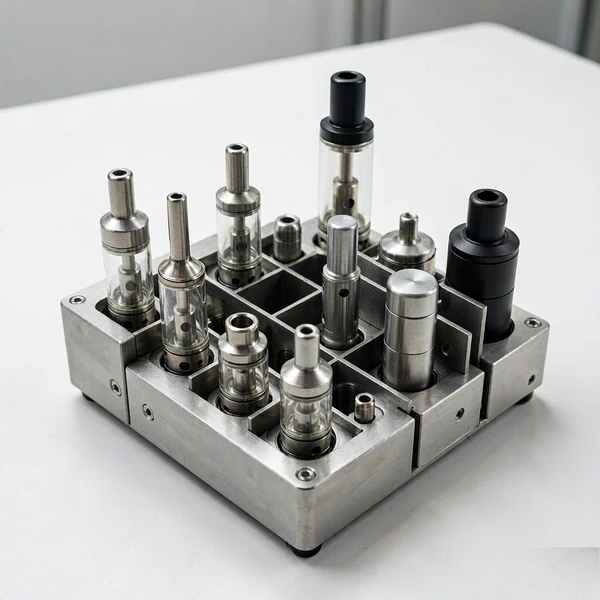
Why Small Batches and Multiple SKUs Are Not the Same Problem
Small-batch production and high-mix production are frequently grouped together, but they create different equipment requirements.
Consider two manufacturers with similar daily production targets.
The first produces one standardized cartridge in several consecutive batches. The second produces several different cartridge designs for separate customers, with each order requiring different handling or filling settings.
Even if their total production volume is similar, the second manufacturer has a greater need to manage product changes.
This is where the distinction between batch size and SKU complexity becomes important.
| Production pattern | Main operational concern | Equipment consideration |
|---|---|---|
| Small batches of one cartridge | Repeatable operation at modest volume | Simple, controlled dispensing |
| Multiple cartridge designs | Different filling-port positions and body dimensions | Adaptable positioning or compatible fixtures |
| Frequent oil changes | Material preparation and cleaning between formulations | Accessible material paths and suitable controls |
| Repeated larger orders | Repetitive handling across long runs | Automated positioning and multi-nozzle filling |
| Dual-formula cartridges | Independent handling of two materials | Separate reservoirs and dispensing paths |
For a high-mix manufacturer, reducing unnecessary setup complexity may be more valuable than choosing the machine with the highest published output.
For a manufacturer running one product consistently, more extensive automation may become easier to justify.
Neither production model automatically determines the right machine. The goal is to understand which tasks actually change between orders.
Where Semi-Automatic Cartridge Filling Makes a Practical Difference
Different Customer Cartridges With Changing Filling Positions
OEM manufacturers often receive hardware selected by their customers rather than choosing one cartridge design for their entire operation.
Two cartridges with the same nominal capacity can still have different body dimensions, filling-port locations, or access restrictions around the opening.
A fixed automatic tray must hold each cartridge in the correct position relative to the filling nozzle. When hardware varies, separate fixtures or revised positioning settings may be required.
A handheld dispensing arrangement offers a different method of working.
For example, Longwill's Semi-Auto Cart Filler with Hand Hose uses a handheld filling hose, allowing an operator to guide the dispensing point toward compatible cartridge openings.
The machine's material-handling system includes separately adjustable heating areas for the reservoir, pump, and hand hose.
This configuration may be useful when filling positions change between orders and an operator-controlled nozzle is more practical than a dedicated tray arrangement.
However, handheld dispensing is not universal hardware compatibility. Buyers must still check that the filling needle can access the opening, the cartridge can be held securely, and the required dose is within the machine's operating capabilities.
New Product Launches With Uncertain Repeat Orders
A brand introducing a new cartridge product may initially produce short commercial runs before committing to larger repeat orders.
During this stage, the cartridge specification, selected formulation, or order frequency may still change.
A highly automated configuration designed around one stable production format may involve more dedicated tooling than the project currently requires.
Semi-automatic equipment can provide machine-controlled dispensing while retaining direct operator involvement in the filling process.
Longwill's FM10 Smart Cart Filling Machine illustrates this approach. It uses touchscreen controls and a stepper-motor-driven system with rail-guided movement.
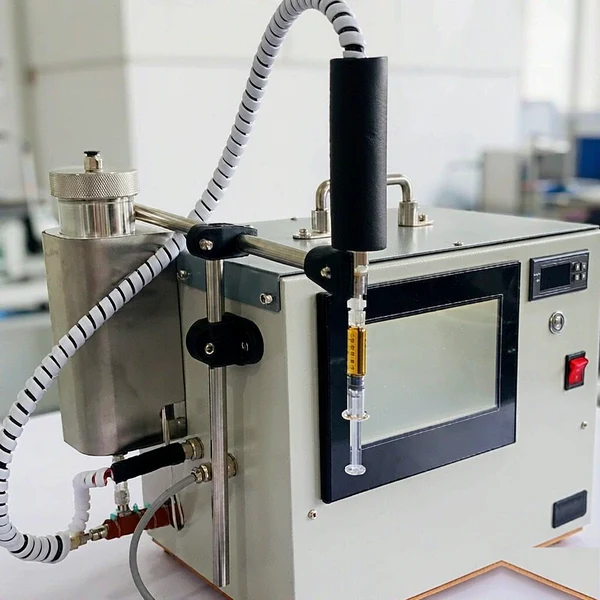
These features support an equipment-controlled dispensing process, while the machine's overall configuration remains different from a fully automated multi-nozzle production system.
For manufacturers introducing new products, the purchasing decision should focus on whether the machine supports their actual cartridge format, dose requirements, and expected operating method.
A semi-automatic machine can be appropriate for this stage, but the choice should not be based solely on the assumption that the product is new or that the first order is small.
Dual-Flavor Products Requiring Separate Oil Handling
Some cartridge projects are more complex because of the formulations rather than the hardware alone.
A dual-flavor cartridge may require two oils to remain separate during material preparation and dispensing.
Repeatedly switching formulations through one reservoir can introduce additional cleaning and material-handling requirements. For an application requiring two independent oil supplies, a dual-reservoir configuration may provide a more suitable starting point.
Longwill's Dual Flavor Oil Filling Machine features two independent oil tanks and supports single-oil or dual-oil operating modes.
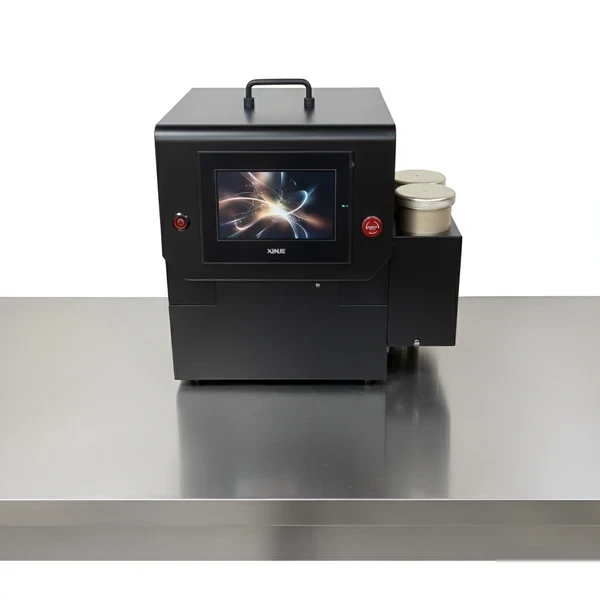
This differs from a conventional single-reservoir semi-automatic filling station.
The machine's suitability still depends on the cartridge's internal structure, access to its filling openings, the required volume for each chamber, and the materials being dispensed.
Separate reservoirs can keep the material supplies distinct, but they do not remove the need to assess the complete dispensing path and the cartridge design.
For businesses developing dual-formula products, the presence of independently controlled material paths may be more important than choosing between semi-automatic and fully automatic operation in general.
What Does Semi-Automatic Filling Actually Automate?
The term semi-automatic can be misleading because different machines automate different parts of the filling process.
On some equipment, the machine controls the amount dispensed while the operator positions each cartridge and initiates the cycle. Other configurations incorporate motorized movement, touchscreen settings, or alternative activation methods.
The operator may still be responsible for cartridge loading, alignment, material replenishment, transferring completed units, and changing between production batches.
This division of work has practical consequences.
Operator involvement allows direct handling of compatible hardware, which may be useful for changing products. At the same time, it creates repetitive tasks that must be considered when production runs become longer.
The equipment also does not eliminate the need for process control. Consistent filling still depends on suitable dispensing settings, material behavior, and correct positioning.
In other words, semi-automatic equipment does not simply sit halfway between manual and automatic filling in every respect.
The buyer should identify exactly which actions the machine controls and which remain the operator's responsibility.
For a manufacturer processing many short orders, this arrangement may be appropriate. For a facility repeatedly filling identical cartridges throughout the day, manual handling may eventually become an important operational limitation.
When Can Full Automation Be the Better Investment?
Semi-automatic equipment becomes less attractive when the advantages of flexible manual handling are outweighed by the amount of repetitive work involved.
A facility producing the same cartridge format in regular, predictable runs can often plan around established fixtures and consistent operating programs.
Under those conditions, automatic positioning and multi-nozzle filling may be worth considering because the setup can be used repeatedly rather than changed for every short order.
However, higher automation also brings its own selection requirements.
The cartridge must fit the intended fixtures, filling openings must align with the dispensing system, and the machine's configuration must support the actual material and target dose.
The decision is therefore not simply whether the business has grown beyond a particular production quantity.
A manufacturer could have substantial overall production volume but continue to handle many customized short orders. Another business with lower total output might produce only one standardized product and have a stronger reason to use dedicated automation.
The more relevant question is whether the existing product mix provides enough repeated work to benefit from automatic handling.
It is also possible for a manufacturer to use different filling configurations for different tasks—for example, one for changing custom orders and another for repeat production—provided the operating and investment requirements justify the arrangement.
How Should Buyers Compare the Cost of Different Filling Setups?
Equipment purchase price is important, but it does not capture all the work involved in producing different cartridge orders.
For high-mix production, buyers should also consider fixtures, operator handling, cleaning requirements, and the effort associated with changing products.
A more automated machine may reduce certain repetitive tasks, but its suitability depends on how often the same setup can be reused.
A semi-automatic system may involve a lower initial equipment commitment for some configurations, while requiring greater operator involvement throughout production.
Without actual quotations, labor costs, production schedules, and changeover information, neither arrangement can be assigned a reliable universal payback period.
Instead of using a fixed ROI claim, manufacturers can compare three questions:
- How much of the production schedule is repeated work? A stable product mix makes dedicated automation easier to use consistently.
- What must change between orders? Different cartridge fixtures, materials, and operating parameters can affect the practicality of each system.
- Where is operator involvement useful, and where is it repetitive? The answer helps identify which parts of the workflow are worth automating.
A purchase decision based on these factors is more meaningful than comparing equipment prices without considering the production pattern.
Matching Longwill Semi-Automatic Equipment to Your Application
Longwill provides several semi-automatic cartridge filling configurations that reflect different approaches to dispensing and material handling.
Instead of recommending one model for all manufacturers, the equipment can be considered according to the specific task that needs to be performed.
Published equipment features; actual compatibility depends on the selected configuration.
| Longwill solution | Equipment characteristics | Main application consideration |
|---|---|---|
| FM10 Smart Cart Filling Machine | Touchscreen controls and motor-driven dispensing | Machine-controlled filling with operator involvement |
| Semi-Auto Cart Filler with Hand Hose | Handheld filling hose and separately adjustable heating areas | Operator-controlled positioning for compatible cartridge formats |
| YC-300 Dual-Flavor Filling Machine | Two independent oil tanks and single/dual-oil modes | Separate material handling for compatible dual-formula applications |
The three configurations address different aspects of cartridge filling.
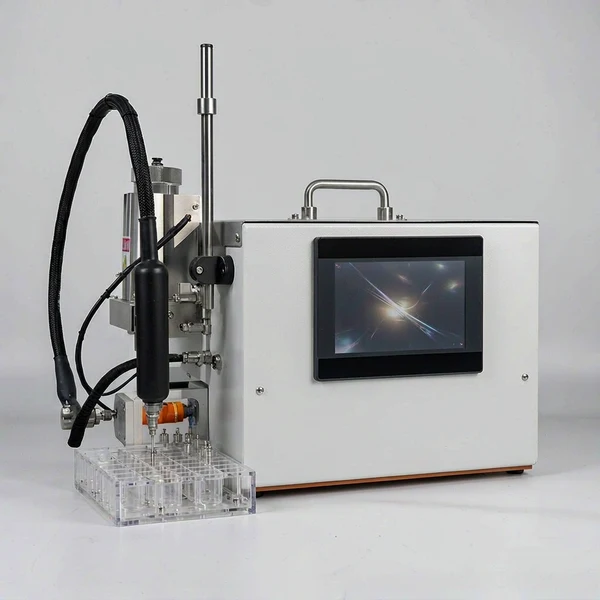
FM10 is relevant when controlled dispensing and straightforward operating controls are priorities. A handheld hose configuration may be worth evaluating when cartridge access and individual positioning vary between products. A dual-reservoir system addresses applications where two separate formulations must be supplied.
These differences should guide the initial equipment discussion, not be treated as proof that any model is compatible with every cartridge or material.
A suitable recommendation requires information about the planned cartridge, filling volume, material, production batch pattern, and operating requirements.
Semi Automatic Vape Cartridge Filling Machine to review available configurations.
Frequently Asked Questions
Is a semi-automatic cartridge filling machine a good choice for small-batch manufacturing?
A semi-automatic machine can be suitable for small-batch manufacturing when the operator needs to position cartridges individually while the equipment controls dispensing. This arrangement can be useful for short production runs or products that change frequently.
However, batch size alone does not determine suitability. Cartridge geometry, material requirements, target filling quantity, and the amount of handling required between cycles are also important. A manufacturer producing small, repetitive batches of the same cartridge may have different requirements from one handling multiple custom orders. Buyers should compare actual operating tasks and compatible configurations rather than assuming semi-automatic equipment is always the best choice for smaller quantities.
Can semi-automatic cartridge filling equipment handle different SKUs?
Some semi-automatic configurations offer adjustable settings or handheld dispensing arrangements that can accommodate different compatible cartridge formats. However, this does not mean every SKU can be filled without modification.
Different filling-port positions, cartridge dimensions, nozzle access requirements, and material properties may call for separate needles, fixtures, or operating adjustments. Changing the formulation can also introduce cleaning requirements. Manufacturers should identify their planned product variations before ordering and confirm the setup needed for each one. A useful comparison is not only whether the machine can handle multiple SKUs, but also what changes are required between them.
Is semi-automatic filling more accurate than manual cartridge filling?
Semi-automatic equipment can use controlled dispensing mechanisms to reduce dependence on manual dose measurement. However, filling accuracy depends on the selected machine, dispensing system, material conditions, and setup.
The automation level alone does not establish a particular accuracy result. Operators still need to position cartridges correctly and use settings appropriate for the material being dispensed. Buyers should examine the published specifications for the exact configuration and clarify the conditions under which those figures apply. It would be misleading to assume that every semi-automatic machine achieves the same accuracy or that mechanized dispensing removes all sources of variation.
Can one semi-automatic filling machine be used for different oil formulations?
Certain semi-automatic machines provide adjustable heating and dispensing controls that may support different oils, subject to the equipment's operating limits and the formulation's processing requirements.
Changing material can involve more than adjusting temperature. Buyers may need to consider viscosity, target dose, compatibility with contact materials, residual oil in the dispensing path, and cleaning procedures between batches. Where a product requires two separate formulations, a dual-reservoir design may be appropriate. Even then, each material path and filling operation must be assessed against the intended cartridge. Compatibility should be confirmed for the actual formulation rather than inferred from a broad list of supported oils.
When does a fully automatic cartridge filling machine make more sense?
Fully automatic equipment may be more appropriate when production uses standardized cartridge designs in repeated, predictable runs and manual cartridge handling is becoming an operational constraint.
Dedicated fixtures and programmed positioning can be useful when the same configuration is used frequently. However, a higher automation level does not eliminate the need to check cartridge compatibility, material requirements, and equipment setup. A manufacturer handling many changing products may continue to benefit from a semi-automatic configuration even as overall order volume increases. The decision should follow the production pattern and operating requirements rather than a fixed daily output threshold.
What should I tell Longwill before choosing a semi-automatic filling machine?
Buyers should provide the cartridge type, dimensions, filling-port position, sample or drawing, target dose, and relevant information about the material to be filled.
It is also useful to explain how many SKUs are produced, whether formulations change between batches, and whether the project involves one or two separate material paths. Expected batch sizes and the preferred operating method can help narrow the available configurations. With these details, Longwill can discuss equipment options, possible fixture requirements, and the aspects of material or hardware compatibility that need confirmation before ordering.
Choose the Filling Process That Fits Your Product Mix
Semi-automatic cartridge filling is not necessarily a temporary stage before full automation. For manufacturers handling changing cartridge designs, short commercial runs, or multiple formulations, it can be a deliberate equipment choice.
The important consideration is how much of the filling process needs to be standardized and how much still benefits from direct operator control.
Longwill offers touchscreen-operated filling equipment, handheld hose configurations, and dual-reservoir systems for different cartridge filling requirements.
Handling multiple cartridge SKUs or frequent product changes? Share your hardware drawings, material information, typical batch sizes, and filling requirements with Longwill Machinery to discuss an appropriate semi-automatic configuration.
Table of Contents