
How Do Injection Depth and Placement Affect Oil Distribution in Infused Pre-Rolls?
Adding concentrate to a pre-roll involves more than controlling how much material enters each joint. Where the concentrate is deposited and how it spreads inside the pre-roll also influence the finished product.
For manufacturers producing infused pre-rolls in batches, two products can receive the same target dose but show different internal distribution. One may have concentrate concentrated around a particular section, while another may have a more consistent distribution along the intended infusion area.
This makes injection position an important part of the infusion process. The starting point, ending point, and injection depth all need to be considered alongside concentrate viscosity, pre-roll dimensions, and the machine's dispensing settings.
Understanding how these factors interact helps manufacturers evaluate their infusion process and choose equipment that can accommodate different product specifications.
Why Does Injection Placement Matter in Infused Pre-Roll Production?
The position where concentrate enters a pre-roll affects where the material is initially deposited. However, the final distribution also depends on how the concentrate moves through the packed material after injection.
If the injection position is not suitable for the pre-roll structure, concentrate may accumulate in a limited area rather than reaching the intended section. This can create differences between individual products, even when the programmed dose remains unchanged.
How Injection Location Affects Concentrate Distribution
Injection location determines where concentrate first enters the pre-roll. Depending on the intended product structure, manufacturers may need to control the position of the injection point rather than simply placing the needle at a convenient location.
For example, an injection point positioned too close to one end may leave part of the intended infusion area with limited concentrate distribution. A different placement may produce another distribution pattern, depending on the material's viscosity and the internal structure of the pre-roll.
The appropriate position should therefore be evaluated against the product's dimensions and infusion requirements. A setting that works for one pre-roll size should not automatically be applied to every product format.
What Happens When Concentrate Pools in One Area?
Concentrate pooling occurs when material accumulates in a localized section instead of spreading across the intended area.
Several factors may contribute to this result, including the injection point, dispensing volume, material flow behavior, and the way the concentrate interacts with the packed contents.
Uneven distribution can affect the consistency of the finished product. Localized concentrate accumulation may also create differences in burning behavior and product performance.
For manufacturers, the objective is not necessarily to spread concentrate over the entire pre-roll. It is to achieve the intended distribution pattern consistently across production batches.
How Do Injection Start Point, End Point, and Depth Affect Distribution?
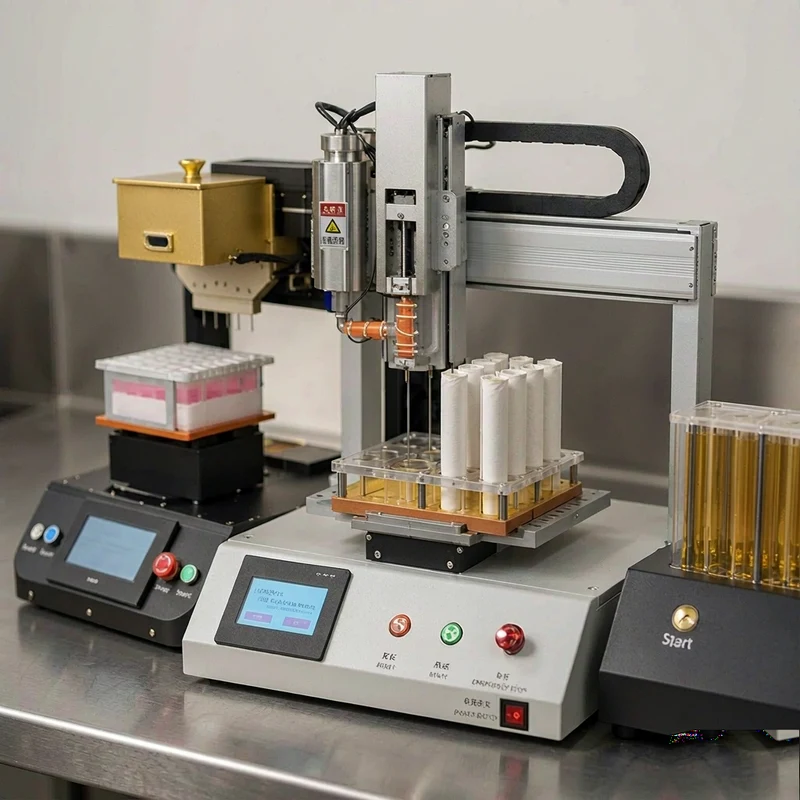
Injection settings determine where concentrate enters the pre-roll and how the dispensing process is carried out. Three factors deserve particular attention: the starting point, the ending point, and the injection depth.
These settings should be evaluated together because changing one may affect the final distribution without necessarily changing the total dispensing dose.
Injection Start Point and Initial Concentrate Placement
The injection start point determines where concentrate is first deposited.
If the starting position is too close to the edge of the intended infusion area, the concentrate may remain concentrated near that section. Moving the starting point changes the initial placement and can alter how the material distributes along the pre-roll.
When evaluating different settings, manufacturers should consider the usable length of the pre-roll, the intended infusion area, and the location of the filling needle.
The goal is to establish a repeatable starting position that suits the product format rather than relying on one fixed setting for every pre-roll.
Injection End Point and Distribution Coverage
The injection end point determines where the dispensing process finishes.
Together with the starting point, it defines the length of the area covered during injection. If the distance between these points is not suitable for the pre-roll, concentrate may be deposited over a shorter or longer section than intended.
For this reason, the injection range should be evaluated in relation to the pre-roll's dimensions and the required concentrate distribution.
Manufacturers should compare the actual results from different start and end positions instead of assuming that a longer injection range will always produce more uniform distribution.
Injection Depth and Internal Placement
Injection depth affects where concentrate is deposited inside the pre-roll.
If the needle does not reach the intended internal position, concentrate may remain closer to the outer portion of the packed material. Conversely, an unsuitable insertion depth may cause the material to be deposited in an area that does not match the intended product structure.
The appropriate depth depends on the pre-roll's diameter, internal packing, needle design, and injection requirements.
It is also important to maintain consistent needle positioning during repeated production cycles. Even when the target dose remains the same, differences in insertion position can influence where the concentrate is deposited.
What Factors Should Be Considered When Setting Injection Positions?
Injection position should not be determined independently of the material and pre-roll specifications. A suitable setup needs to account for the physical characteristics of the finished product and the concentrate being used.
Pre-Roll Length, Diameter, and Internal Structure
Pre-roll dimensions determine the available space for concentrate injection.
A longer pre-roll may require a different injection range from a shorter one. Diameter and internal packing also affect where the needle can be positioned and how concentrate interacts with the surrounding material.
Before setting injection positions, manufacturers should confirm:
- Pre-roll length and diameter.
- The intended concentrate injection area.
- Internal packing consistency.
- Needle access and alignment.
- The target product format.
When production involves multiple pre-roll sizes, each format should be evaluated separately. Using identical settings across different dimensions may not produce the same distribution results.
Concentrate Viscosity and Flow Behavior
The concentrate itself also influences the injection process.
Distillate, live resin, and rosin can have different flow characteristics. Their behavior during dispensing may change with temperature and formulation, which can affect how the material exits the needle and interacts with the packed contents.
A setting that works with one concentrate may not be suitable for another.
For this reason, manufacturers should evaluate injection position alongside material temperature, dispensing settings, and actual concentrate behavior. Testing the intended formulation is more reliable than selecting settings based only on the material category.
Target Dose and Injection Settings
The target dose determines how much concentrate needs to be dispensed into each pre-roll, but the same dose can produce different distribution patterns depending on the injection setup.
For example, depositing a fixed quantity at one location may create a different result from distributing the same quantity across a defined injection range.
Manufacturers should therefore evaluate dose and placement together. Recording the target volume, actual output, injection position, and material conditions helps establish repeatable settings for each product specification.
How to Evaluate Oil Distribution After Injection
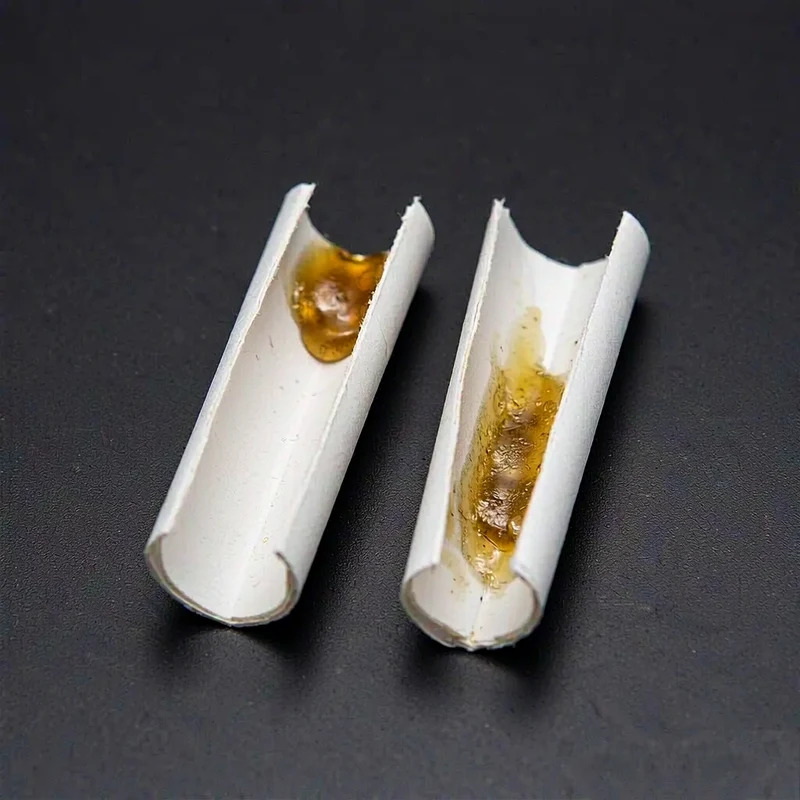
A machine's programmed dose does not show exactly where the concentrate ends up inside the pre-roll. Manufacturers need to examine the finished samples to understand the relationship between injection settings and actual distribution.
Check Concentrate Placement Along the Pre-Roll
One practical method is to inspect representative samples after injection.
Depending on the product and inspection method, manufacturers can examine the internal distribution through cross-sectional samples or other suitable inspection procedures.
The evaluation should focus on:
- Where the concentrate is initially deposited.
- Whether the material remains concentrated in one section.
- How far the concentrate extends along the intended infusion area.
- Whether similar samples show comparable distribution patterns.
Cross-sectional inspection can help reveal localized accumulation that may not be visible from the outside.
Compare Different Injection Settings
Testing different injection positions can help identify which setup is more suitable for a particular pre-roll format.
For a controlled comparison, keep the concentrate formulation, target dose, pre-roll dimensions, and operating conditions consistent while changing one injection parameter at a time.
For example, manufacturers can compare different starting positions or insertion depths and then inspect the resulting samples.
Changing several settings simultaneously makes it difficult to determine which factor caused the observed difference.
Record Results Across Multiple Samples
A single sample cannot establish whether an injection setup is repeatable.
Manufacturers should evaluate multiple pre-rolls produced under the same settings and record the results for each test group.
Useful records include:
- Target concentrate dose.
- Actual dispensing volume.
- Injection start and end positions.
- Needle insertion depth.
- Material temperature.
- Observed distribution pattern.
Comparing these records across multiple samples helps identify whether the selected setup produces repeatable results or requires further adjustment.
What Should Buyers Check Before Choosing a Pre-Roll Infusion Machine?
When evaluating a pre-roll infusion machine, buyers should look beyond the number of needles or the advertised production speed. The equipment also needs to match the dimensions, concentrate type, and injection requirements of their products.
Several points are worth confirming before making a purchase.
1. Can the machine accommodate different pre-roll dimensions?
Check whether the equipment can handle the required pre-roll lengths and diameters. Different formats may require different needle positions or product fixtures.
2. How is the injection dose controlled?
Confirm the adjustable dispensing range, available dosing settings, and whether the machine can maintain repeatable output under the intended operating conditions.
3. Can the injection position and depth be adjusted?
Ask the supplier how needle positioning is configured, whether insertion depth can be changed, and which adjustments are available for different product formats.
4. How is concentrate temperature managed?
Temperature can influence material flow and dispensing behavior. Check how the machine manages temperature along the material path and whether different settings can be used for different concentrate formulations.
5. Can the supplier demonstrate actual infusion results?
Request sample testing using your intended concentrate and pre-roll specifications. Inspect the finished samples and compare the results across multiple production cycles.
These checks provide a more practical basis for comparing equipment than relying on needle count or nominal output alone.
How Does the Longwill FM-16 Support Pre-Roll Infusion?
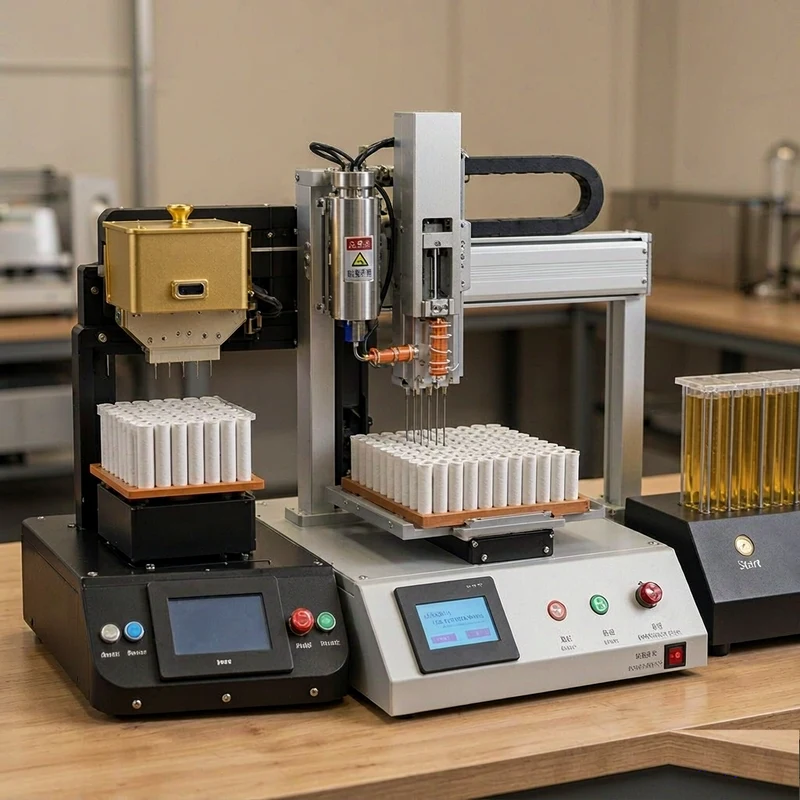
For manufacturers looking to automate concentrate injection, the Longwill FM-16 10-Nozzle Pre-Roll Infusion Machine is designed to handle multiple pre-rolls within an automated production cycle.
The machine features 10 injection nozzles, allowing multiple pre-rolls to be processed during the same operating cycle. Its adjustable dosing range of 0.1–3ml supports different concentrate filling requirements.
Temperature management is another important part of the system. The FM-16 uses three-stage temperature control across the oil reservoir, pump, and injection needles, helping manage concentrate conditions throughout the feeding and dispensing process.
PLC control supports machine operation and parameter management, making the equipment suitable for manufacturers looking to standardize their pre-roll infusion process.
When evaluating the FM-16 for a particular product format, manufacturers should confirm the available needle positioning adjustments, pre-roll dimensions, target dose, and concentrate compatibility. These factors need to be checked against the actual production requirements rather than assumed from the machine's multi-nozzle configuration.
If you are planning to automate infused pre-roll production, share your pre-roll dimensions, concentrate type, target dose, and expected output with Longwill. Our team can review your application and help determine a suitable machine configuration and testing approach.
Explore the Longwill FM-16 10-Nozzle Pre-Roll Infusion Machine to learn more about its configuration and application.
Frequently Asked Questions
Does injection depth affect oil distribution in infused pre-rolls?
Yes. Injection depth influences where concentrate is deposited inside the pre-roll. If the needle position does not match the intended internal structure, the material may accumulate in an unsuitable area. The appropriate depth should be evaluated using the actual pre-roll dimensions and concentrate formulation.
Where should concentrate be injected into a pre-roll?
The appropriate injection position depends on the intended infusion area, pre-roll dimensions, concentrate properties, and product design. Manufacturers should establish the starting and ending positions through sample testing rather than applying one fixed position to every format.
Can different pre-roll lengths require different injection positions?
Yes. Different pre-roll lengths may require different injection ranges. The starting point, ending point, and usable infusion area should be evaluated for each product format to maintain consistent placement.
Does concentrate viscosity affect injection placement?
Yes. Concentrate viscosity affects how material moves through the dispensing system and spreads after injection. Temperature and formulation can also influence flow behavior, so different concentrates may require different operating settings.
How can manufacturers check oil distribution after infusion?
Manufacturers can inspect representative samples, including cross-sectional samples where appropriate, to evaluate concentrate placement and distribution. Comparing multiple samples produced under the same conditions helps determine whether the process is repeatable.
Can a pre-roll infusion machine adjust injection start and end points?
This depends on the machine's design and available positioning controls. Buyers should confirm whether the equipment supports adjustments to the injection range, needle insertion depth, and positioning for different pre-roll specifications before purchasing.