
Live Resin vs Rosin vs Distillate: Choosing the Right Cartridge Filling Equipment
Live resin, rosin and distillate can all be used in cartridge production, but they do not necessarily behave the same way during filling. Their flow characteristics can vary according to formulation, processing method, storage condition and operating temperature. Choosing a live resin cartridge filler or another cannabis oil filling system should therefore begin with the actual material and packaging format, not simply the concentrate name.
The right equipment must move the material through the reservoir, transfer path and nozzle at a controlled rate while delivering the required dose into the selected container. For some products, this means using a temperature-controlled cartridge filling machine. For concentrates packed into jars, a dab or wax filling machine may be the more appropriate solution.
This guide compares the filling requirements of live resin, rosin and distillate and explains how to select equipment based on viscosity, container type, production volume and changeover frequency.
Quick Answer: Which Filling Equipment Should You Choose?
A cartridge manufacturer working with live resin or rosin should generally evaluate a filling machine with controlled heating, adjustable dispensing parameters and a material path designed for viscous concentrates. Distillate may also require heating, but its production behavior can become more predictable when the formulation and operating conditions remain stable.
The material name alone is not enough to approve a machine. Two live resin formulations may have different flow characteristics, while a prepared rosin formulation may flow more easily than expected. Final equipment selection should therefore be confirmed through a filling trial using representative material and the actual cartridge or container.
This matrix provides an initial selection direction. The actual formulation, filling volume, container dimensions and production conditions still need to be reviewed before the equipment configuration is confirmed.
| Production requirement | Equipment direction | Main selection priority |
|---|---|---|
| Live resin filled into cartridges | Temperature-controlled cartridge filler | Stable flow through the complete material path |
| Rosin formulation filled into cartridges | High-viscosity cartridge filling system | Pump suitability, nozzle flow and controlled dispensing |
| Distillate filled into cartridges | Semi-automatic or automatic cartridge filler | Repeatable dosing, output and cartridge compatibility |
| Dab or wax packed into jars | Dab/wax filling machine | Suitable dosing range and container access |
| Multiple formulations or frequent SKU changes | Flexible semi-automatic system | Cleaning, changeover and adjustable parameters |
| Continuous high-volume cartridge production | Automatic filling or filling-and-capping line | Throughput, feeding, capping integration and repeatability |
Why Material Type Changes the Filling Process
The most important material property during filling is not the marketing category printed on the product label. It is how the formulation flows under actual production conditions.
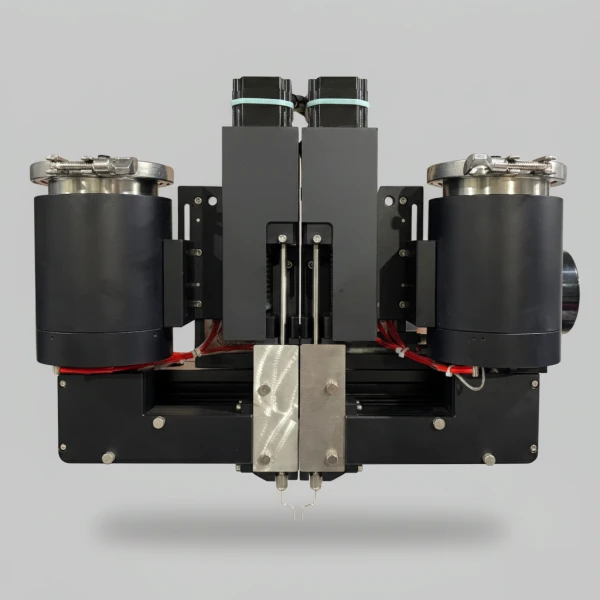
Viscosity affects how quickly material enters the dispensing mechanism, moves through tubing or internal channels and exits the nozzle. If the material becomes less fluid during production, the machine may dispense more slowly, form strings at cut-off or deliver inconsistent doses. If the material becomes too fluid for the selected settings, it may continue flowing after the intended cut-off point and cause dripping or contamination around the cartridge opening.
Temperature is one of the process variables used to establish workable and repeatable flow. It should not be treated as a universal setting for every live resin, rosin or distillate batch. Reservoir temperature alone is also insufficient if the transfer path or nozzle cools significantly before dispensing.
Nozzle diameter, filling speed, pump or motor settings, batch residence time and cartridge inlet size must be evaluated as part of the same process. A meaningful equipment trial should reproduce the intended production workflow rather than testing only whether the material can pass through the nozzle once.
Live Resin Filling Equipment Requirements
A live resin filling machine must accommodate the flow characteristics of the actual formulation while allowing operators to control the conditions that affect dispensing. The appropriate configuration also depends on whether the material is being filled into cartridges, disposable devices, syringes or concentrate jars.
For cartridge production, the equipment should maintain workable flow from the reservoir to the nozzle. A heated tank may condition the bulk material, but an unheated or overly restrictive dispensing path can still become the limiting point. Adjustable filling speed and shot size are also important because the correct settings may change when the cartridge design, filling volume or formulation changes.
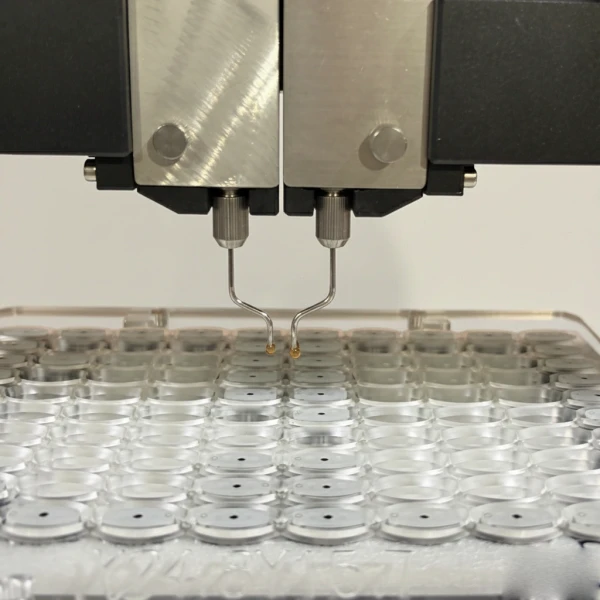
When evaluating a live resin cartridge filler, buyers should consider:
- Controlled heating across the relevant material-contact areas
- Adjustable filling volume and dispensing speed
- A nozzle and flow path suitable for the working viscosity
- Compatibility with the cartridge inlet and target fill volume
- Clean cut-off without excessive dripping or stringing
- Accessible cleaning between formulations or batches
- Repeatable operation throughout the intended production run
These criteria are more useful than selecting a machine only because it is advertised as compatible with a broad range of oils. Compatibility should be demonstrated with the buyer’s own formulation and cartridge under clearly defined testing conditions.
Rosin Cartridge Filling Challenges
Rosin formulations can present demanding filling conditions because their consistency may change with formulation, preparation method and temperature history. However, it would be inaccurate to assume that every rosin batch requires the same temperature or machine setting.
A suitable rosin cartridge filling machine needs enough dispensing capability and process control to move the material without creating an unstable start-and-stop cycle. The inlet should remain sufficiently supplied, while the nozzle must place the dose into the cartridge without contacting or contaminating the surrounding hardware.
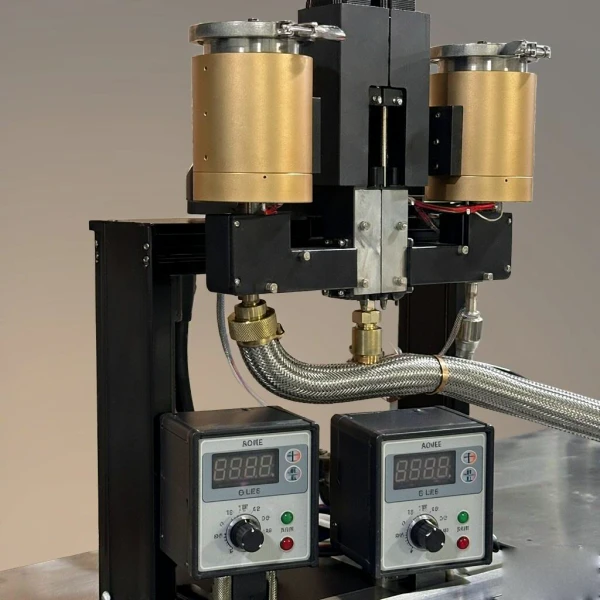
Rosin cartridge projects should pay particular attention to three equipment areas. First, the dispensing mechanism must handle the material’s actual working viscosity. Second, the heated path should minimize significant temperature variation between the reservoir and nozzle. Third, the machine should allow controlled parameter adjustment instead of relying on one fixed recipe for every batch.
Production teams should also assess the time between filling and capping. A filling machine may dispense accurately while the overall line still performs poorly if cartridges wait too long, become difficult to cap or require excessive manual handling. Equipment selection should therefore consider the complete filling-and-capping workflow rather than the filler’s nominal speed alone.
Distillate Cartridge Filling Requirements
Distillate is commonly used in established cartridge production processes, but that does not mean every formulation behaves identically. Its viscosity can still change with composition and production conditions, making consistent material conditioning and dispensing control necessary.
When the oil and cartridge format remain stable, a distillate cartridge filler can be configured for repeatable batch production. The main purchasing question is often how much automation the operation requires. A semi-automatic system may provide sufficient control for smaller runs or frequent product changes, while an automatic system may be more appropriate for continuous production with standardized cartridges.
Key evaluation points include dosing range, repeatability during a full batch, cartridge positioning, nozzle alignment, cleaning time and the ability to reproduce approved settings. High output has limited value if operators must frequently stop the machine to clear the nozzle, correct cartridge alignment or compensate for changing material flow.
For thicker formulations, clogging is not always caused by the nozzle alone. Operators may also need to review material temperature, the transfer path, dispensing speed and how long the material remains stationary during pauses. These factors should be tested together before changing a single component.
Live Resin vs Rosin vs Distillate Equipment Decision Matrix
The following comparison shows how material behavior can influence equipment selection. Because formulations vary, these descriptions should be treated as purchasing considerations rather than fixed technical classifications.
| Decision factor | Live resin | Rosin formulation | Distillate |
|---|---|---|---|
| Primary filling concern | Maintaining stable flow throughout the dispensing path | Moving potentially resistant material with controlled dispensing | Repeating an approved process across the full batch |
| Heating requirement | Determined by actual formulation behavior | Validated through a representative material trial | Determined by viscosity and target filling speed |
| Dispensing priority | Adjustable speed and clean nozzle cut-off | Suitable dispensing force, stable supply and clean cut-off | Repeatable shot size and production efficiency |
| Equipment direction | Temperature-controlled cartridge filler | High-viscosity cartridge filling system | Semi-automatic or automatic cartridge filler |
| Changeover consideration | Cleaning between formulations or strains | Residue removal from material-contact areas | Cleaning time based on production schedule and SKU mix |
| Best validation method | Trial with representative material and actual cartridges | Extended trial covering start-up and continuous filling | Batch trial at the intended output and fill volume |
The appropriate machine is the one that can maintain acceptable filling results throughout the intended production run. A short demonstration using a substitute oil cannot fully establish compatibility with the final commercial formulation.
Cartridge Filling Machine or Dab/Wax Filling Machine?
Packaging format is as important as concentrate type. A cartridge filling machine and a dab filling machine may both dispense viscous materials, but they are designed around different containers and production tasks.
A cartridge filler places a relatively small, controlled dose through a restricted cartridge opening. Nozzle position, cut-off behavior and cartridge handling are central to the process. Depending on production scale, the system may also need to coordinate with cartridge loading and capping.
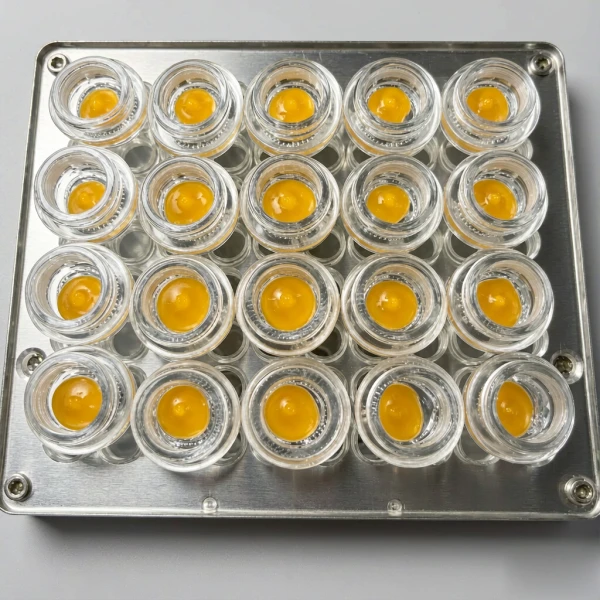
A dab or wax filling machine dispenses concentrates into jars or other containers with wider openings. This application may require a different dosing range, nozzle geometry, fixture design and container-handling method. Choosing a jar filler for a cartridge project—or a cartridge filler for a wide-range dab packaging project—can create unnecessary limitations even if both machines can move the material.
Longwill’s FM18 Dab/Wax Filling Machine is designed for concentrates packed into jars and similar containers. It supports 0.1–10 g programmable dosing, ±0.01 g filling accuracy and an output of 20–30 jars per minute. An air-free reservoir system and PLC motor-driven metering support controlled dispensing during batch production.
When live resin, rosin or distillate is being packed into cartridges, manufacturers should instead evaluate a semi-automatic cartridge filling machine or an Automatic Vape Cartridge Filling Machine, depending on the required output and automation level.
Semi-Automatic vs Automatic Filling Equipment
Automation should be selected according to the complete production workflow rather than output volume alone. A high-speed machine is not automatically the best choice when a facility runs small batches, changes formulations frequently or uses several cartridge designs.
Semi-automatic filling equipment gives operators more direct control over cartridge placement and dispensing. It is generally easier to integrate into flexible production where formulas and hardware change regularly. It can also be useful during pilot runs because process adjustments can be observed without committing to a fully automated line.
Automatic systems become more valuable when the material, cartridge format and filling parameters are sufficiently standardized. They reduce repetitive handling and can integrate filling with cartridge feeding or capping. Buyers should nevertheless calculate usable output after considering warm-up, loading, cleaning, changeovers and production stoppages—not only the machine’s stated maximum capacity.
| Choose semi-automatic equipment when… | Choose automatic equipment when… |
|---|---|
| Batch sizes are small or variable | Production runs are large and repeatable |
| Formulations change frequently | Material and hardware are standardized |
| Operators need direct process control | Reducing repetitive labor is a major objective |
| Several cartridge types require flexible setup | Approved cartridge formats run continuously |
| The filling process is still being validated | Filling parameters have already been established |
A manufacturer upgrading from manual filling should not assume that full automation is the only meaningful improvement. A well-matched semi-automatic system may provide a better operational result when flexibility, cleaning and changeover speed are more important than maximum output.
What to Send the Equipment Supplier Before Requesting a Quote
An equipment supplier cannot reliably recommend a filling configuration based only on the words “live resin,” “rosin” or “distillate.” Providing complete application information makes it easier to determine whether a standard machine is suitable or whether the project requires a different nozzle, tank, dispensing system, fixture or automation configuration.
| Information to provide | Why it matters |
|---|---|
| Material type and representative sample | Allows the supplier to evaluate actual flow behavior |
| Available viscosity or rheology data | Provides a more useful reference than the material name alone |
| Current handling or filling temperature | Establishes the buyer’s existing process conditions |
| Target container | Separates cartridge, disposable, syringe and jar applications |
| Cartridge or jar drawings and samples | Confirms dimensions, inlet access and fixture requirements |
| Target dose and acceptable tolerance | Defines dispensing and verification requirements |
| Required output per hour or shift | Supports automation and capacity selection |
| Batch size and daily changeover frequency | Affects tank size, cleaning and production planning |
| Current filling problems | Identifies clogging, stringing, dripping, bubbles or dose variation |
| Cleaning and material-contact requirements | Determines construction and maintenance needs |
The material submitted for testing should represent the production formulation as closely as possible. If a substitute oil has substantially different flow characteristics, the test may confirm that the machine operates but cannot confirm that it is suitable for the final application.
How to Run a Meaningful Filling Trial
A useful equipment trial should reproduce more than a few successful fills. It should cover start-up, continuous operation, brief production pauses, restart behavior and the end of the batch. This helps determine whether material flow remains stable as the equipment reaches its operating condition and the reservoir level changes.
Before testing begins, the buyer and supplier should agree on measurable acceptance criteria. These may include target dose, acceptable variation, visible dripping, stringing, cartridge contamination, rejected units, stoppage frequency and cleaning time. The criteria should reflect the buyer’s own production and quality requirements rather than relying on a general industry promise.
Once the initial settings have been established, the trial should continue long enough to show whether the process remains repeatable. A machine that fills the first ten units successfully may still require adjustment during a longer run. Recording the approved reservoir, nozzle and dispensing settings also provides a reliable starting point for installation, operator training and future batch setup.
Questions to Ask Before Ordering Filling Equipment
A quotation should define more than the machine model and price. Buyers should confirm what material and container information was used to select the configuration, which parts are included and what conditions were used for any stated output or accuracy.
The supplier should also explain how the system will be tested before shipment, whether buyer-supplied material and containers can be used, and which acceptance standards will apply. For facilities running multiple formulations, it is important to confirm cleaning procedures, changeover time and whether separate tanks, nozzles or material-contact parts are recommended.
After-sales considerations should include installation requirements, operator training, spare parts, technical support and troubleshooting procedures. These details affect the practical cost of operating the machine and should be reviewed alongside filling speed and purchase price.
Frequently Asked Questions
What is the most important feature of a live resin cartridge filler?
The most important requirement is stable, controllable dispensing with the actual live resin formulation and cartridge. Buyers should evaluate the complete material path, including the reservoir, transfer components and nozzle, rather than considering tank temperature alone. Adjustable dose and filling speed, clean nozzle cut-off, cartridge compatibility and accessible cleaning are also important. Final suitability should be confirmed through a representative material trial.
Can one cartridge filling machine handle live resin, rosin and distillate?
One machine may support multiple formulations when its dispensing system, heating capability and parameter range match their actual flow characteristics. However, compatibility should not be assumed from the material names. The supplier should review representative samples, operating conditions, fill volume and cartridge design. Different formulations may require separate settings, nozzles, tanks or cleaning procedures even when they run on the same base machine.
Do live resin and rosin require the same filling temperature?
Not necessarily. Their workable filling conditions depend on formulation, material preparation, equipment path, nozzle design and production target. Even two batches within the same material category may not use identical settings. The appropriate operating range should be established through controlled trials using representative material rather than applying one universal temperature.
Should concentrates be filled with a cartridge filler or a dab filling machine?
Choose the equipment according to the final container. Use cartridge filling equipment when the concentrate must enter cartridges or disposable devices through a restricted opening. Use a dab or wax filling machine when the product is dispensed into jars or similar wide-opening containers. Dose range, nozzle design, fixtures and container handling differ, so the two machine types should not be treated as interchangeable.
What should be tested before buying a rosin cartridge filling machine?
Test the actual formulation with the intended cartridge, dose and production conditions. The trial should check start-up, continuous flow, nozzle cut-off, dose variation, pauses, restart behavior, cartridge cleanliness and the capping workflow. It should also confirm how long cleaning and changeover take. The machine should be approved against measurable acceptance criteria rather than a short demonstration using substitute material.
Is a semi-automatic or automatic cartridge filler better for multiple formulations?
A semi-automatic system is often easier to manage when production involves smaller batches, frequent formula changes or several cartridge formats. Automatic equipment is more suitable when materials, hardware and process settings are standardized and the required output justifies automated handling. The final decision should compare usable output, changeover time, cleaning effort, operator requirements and future production plans.
Choose Equipment Around Your Material and Packaging Process
Live resin, rosin and distillate do not automatically lead to one machine configuration. The decision should combine actual material behavior, target container, filling volume, production output, cartridge or jar dimensions, changeover frequency and downstream capping requirements.
For cartridge applications, Longwill can evaluate semi-automatic and automatic filling configurations based on the customer’s formulation and production target. For concentrates packed into jars, the FM18 provides a dedicated dab and wax filling solution.
Send Longwill your material information, container samples or drawings, target filling volume and required output. Our team will review your application and recommend a suitable filling configuration for testing.
Table of Contents