
Pre-Roll Filling Machine vs Pre-Roll Infusion Machine: Which Equipment Do You Need?
A pre roll filling machine and a pre-roll infusion machine perform different jobs. The filling machine places prepared flower into cones and helps distribute or compact the material. The infusion machine meters oil or concentrate into a pre-roll at a defined stage of production.
The right choice therefore depends less on whether both machines are used in the pre-roll industry and more on where the production bottleneck occurs. A producer making non-infused cones may only need filling equipment. A producer making infused products may need an infusion system in addition to—not instead of—the equipment used to prepare, fill, weigh and close each cone.
Understanding that distinction helps buyers compare equipment around the actual production process rather than selecting a machine from its headline speed or number of stations.
The Fundamental Difference: Flower Filling vs Oil Infusion
A cone filling system is designed primarily for a dry material handling task. Prepared flower is distributed into preformed cones, after which vibration, tamping or another settling method helps place the material within the paper. Depending on the equipment configuration, weighing, closing and final inspection may remain separate operations.
A pre roll infusion machine handles a liquid or semi-liquid dosing task. It must move a controlled amount of oil or concentrate through a product-contact path and deposit it at the intended location. That introduces requirements that do not normally apply to dry flower filling, including oil-path temperature control, dosing calibration, needle alignment and more involved cleaning between batches.
These machines are therefore not direct alternatives. They address different materials, measurements and process stages.
| Selection factor | Cone filling equipment | Infusion equipment |
|---|---|---|
| Main input | Prepared flower | Oil or concentrate |
| Primary operation | Distributing and settling flower in cones | Metering and injecting oil into pre-rolls |
| Main measurement | Flower fill weight | Oil dose by volume or calibrated output |
| Typical process concern | Cone loading, material flow, settling and fill consistency | Oil flow, dosing repeatability, needle position and temperature settings |
| Common changeover task | Cleaning trays and dry-material contact areas | Purging and cleaning the heated oil path, pump and needles |
| Does it complete the whole production process? | No; weighing, closing and inspection may remain separate | No; flower preparation, cone filling and finishing remain separate |
What a Pre Roll Filling Machine Actually Does
Cone filling equipment is appropriate when the main task is placing prepared flower into preformed cones more efficiently than manual filling allows. The machine may use vibration and tamping to settle the material, but its practical output still depends on how quickly operators can load cones, supply flower, remove filled units, verify weight and complete the closing process.
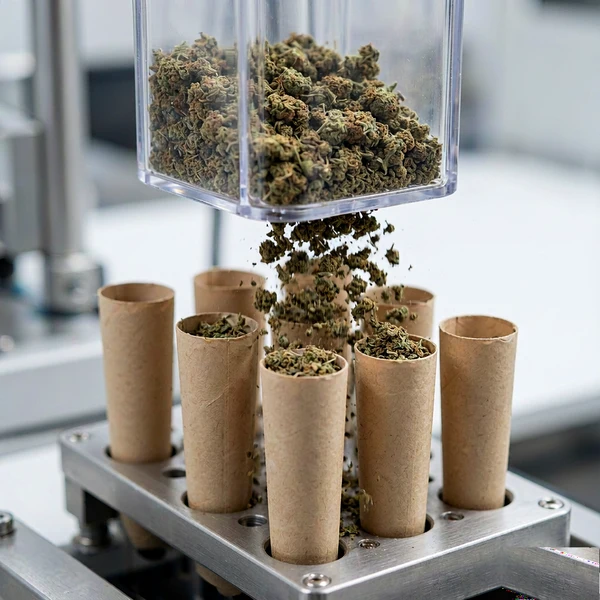
This distinction matters because a machine’s tray capacity is not the same as its finished-unit output. A tray with more positions may increase the number of cones handled in one cycle, but it can also take longer to load and unload. If filled cones accumulate at weighing or closing, increasing the speed of the filling station will not produce an equal increase in sale-ready units.
Before choosing a cone filler, buyers should confirm the following physical requirements:
- Cone length, diameter and paper construction
- Target flower weight per cone
- Grind or particle-size range
- Tray or fixture compatibility
- Required level of tamping or settling
- Operator involvement in cone loading and removal
- Weighing, closing and inspection methods
The relationship between the flower and the filling mechanism also needs testing. Very fine material, irregular particles, moisture variation and inconsistent preparation can change how the material flows or settles. Published machine capacity cannot replace trials with the buyer’s own flower and cones.
When a Pre-Roll Infusion Machine Is Required
Infusion equipment becomes relevant when the production specification includes a measured quantity of oil or concentrate in each pre-roll. Its purpose is not to load the flower but to add the infusion material in a controlled and repeatable manner.
The machine must be evaluated as a fluid-handling system. Buyers need to consider whether the oil can move consistently through the reservoir, pump, tubing and needles under the proposed operating conditions. They must also determine whether the needle position and infusion pattern suit the dimensions and construction of the pre-roll.
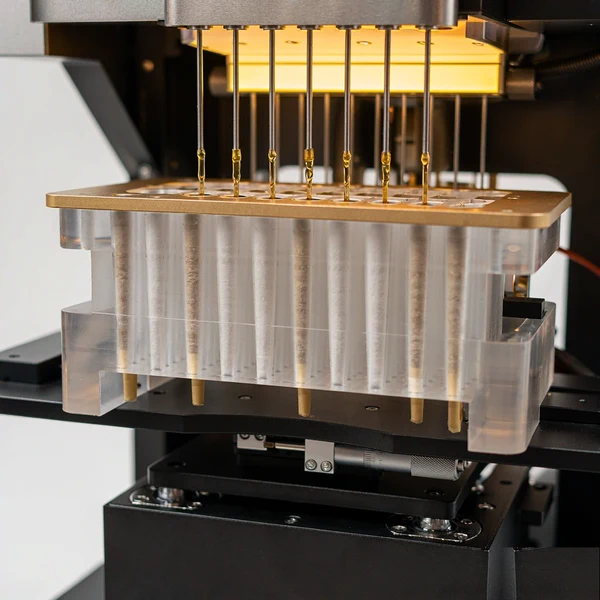
Published dosing ranges provide an initial screening criterion, but they do not establish performance with every oil. The material’s behavior at the selected processing temperature, the requested dose, needle configuration and calibration procedure can all influence actual results. Sample testing is therefore necessary before confirming a production setup.
Cleaning also deserves more attention than it often receives during early equipment comparisons. Residual oil can remain in pumps, tubing, manifolds or needles. A buyer running several formulations should ask how the product-contact path is drained, cleaned and prepared for the next batch, as well as how much material may remain in the system during changeover.
Decision Matrix: Which Equipment Fits Your Production Plan?
The simplest way to choose is to identify the operation that must be automated and the material the machine will handle.
The FM-16 configuration provides ten independent nozzles, a stated dosing range of 0.1–3 ml and separate temperature control for the reservoir, pump and needle areas. Its listed output is up to 3,000 pieces per hour. These are model-specific specifications rather than a guarantee of production results. Actual output and dosing performance need to be verified with the intended formulation, dose, pre-roll format and operating procedure.
| Production requirement | Recommended equipment direction | Why |
|---|---|---|
| Producing standard, non-infused pre-rolls from prepared flower | Pre Roll Filling Machine | The primary task is loading and settling flower in preformed cones |
| Flower is already filled, but oil dosing is manual or inconsistent | FM-16 10-Nozzle Pre-Roll Infusion Machine | The bottleneck is the controlled addition of oil rather than cone filling |
| Producing both infused and non-infused SKUs | Filling equipment plus a separate infusion stage | The same filling process can support both product types, while infusion is used only for the relevant SKUs |
| Manual cone filling is the main labor constraint | Filling equipment first | Automating infusion will not solve a flower-loading bottleneck |
| Oil dosing and needle positioning are the main constraints | Infusion equipment first | Increasing cone-filling capacity will not improve the constrained infusion stage |
| Planning a new infused pre-roll line | Evaluate both systems as one workflow | The line must balance flower preparation, filling, infusion, weighing, closing and inspection |
Do Infused Pre-Rolls Require Both Machines?
In many production plans, yes. A pre-roll still needs to be prepared and filled with flower before it becomes a finished infused product. Infusion equipment adds the oil-handling stage but does not automatically perform grinding, cone loading, flower filling, weighing or closing.
The exact sequence depends on the manufacturer’s validated product design and process. Some operations may infuse at one stage, while others may use a different sequence based on the desired placement, material handling method and finishing procedure. Equipment selection should not begin with an assumption that one sequence is correct for every formulation.
A useful workflow review maps each operation separately:
| Process stage | Main decision |
|---|---|
| Flower preparation | What grind and material condition can be supplied consistently? |
| Cone loading and filling | Which cone formats and target weights must the fixture accommodate? |
| Weight verification | Is every unit checked, or is sampling used under the production procedure? |
| Infusion | What material, dose, placement and operating condition are required? |
| Closing | Is the cone twisted, folded, crimped or finished by another method? |
| Inspection | Which weight, appearance and process records must be checked before release? |
This review often reveals that the highest-speed machine is not automatically the most useful investment. The best first purchase is usually the equipment that addresses the slowest controlled stage without creating excessive idle time or work-in-process at the next station.
How to Compare Throughput Without Being Misled
Machine output should be compared on a common basis: acceptable finished units per hour under defined operating conditions.
For a cone filler, the assessment should include cone loading, the fill cycle, tray removal, weight checks, material adjustment and closing. For an infusion system, it should include pre-roll loading, oil preparation, dosing, unloading, cleaning interruptions and any inspection required after infusion.
Published values such as tray capacity, cycles per minute or nozzles per machine describe only part of this workflow. They become meaningful only when the supplier explains the test conditions behind them.
Ask each supplier to clarify:
- The cone or pre-roll format used for the output calculation
- The number of operators included
- Whether loading and unloading time is counted
- Whether weighing and closing are included
- The material and dose used during testing
- How rejects, adjustments and cleaning stops are treated
- Whether the figure is a rated machine speed or demonstrated line output
This comparison makes it easier to identify whether two quoted production rates measure the same thing.
Hardware Compatibility Must Be Confirmed With Samples
Terms such as “standard cone” or “common pre-roll size” are not sufficient for final equipment approval. Two products with the same nominal length may differ in diameter, taper, paper stiffness, filter construction or manufacturing tolerance. These differences can affect how they sit in a tray or align with an infusion needle.
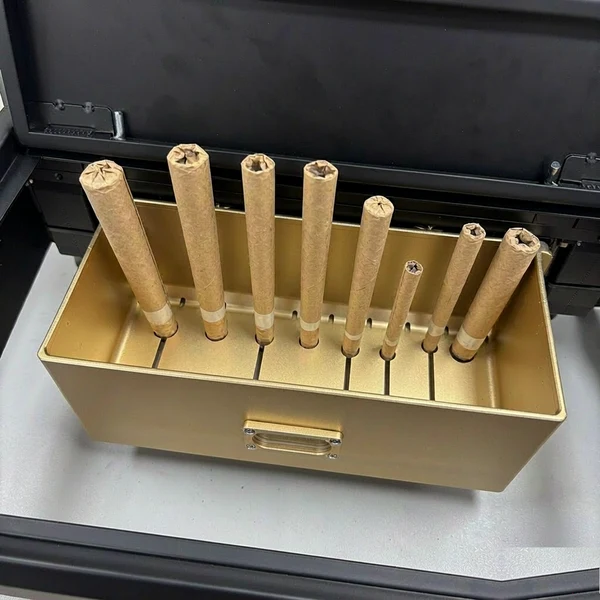
The most reliable purchasing process uses representative samples from the intended production supply chain. For filling equipment, testing should include the actual cones and prepared flower. For infusion equipment, it should also include the proposed oil, dose range and injection position.
If several formats will run on the same machine, each one should be listed separately. Buyers should confirm whether changing between formats requires another tray, fixture, needle arrangement, recipe or mechanical adjustment. The time and parts required for changeover can be as important as the headline output rate.
Cleaning and Changeover Requirements
Dry filling systems and oil infusion systems create different cleaning workloads.
A cone filler generally requires removal of loose flower and cleaning of trays, tamping components and nearby surfaces. The design should allow operators to access areas where material can accumulate without making routine cleaning unnecessarily difficult.
An infusion system requires a documented method for handling the complete product-contact path. The reservoir, pump, tubing, manifold and needles may all require draining or cleaning. Buyers should ask which components are removable, what cleaning materials are compatible and how the system is prepared when changing formulations.
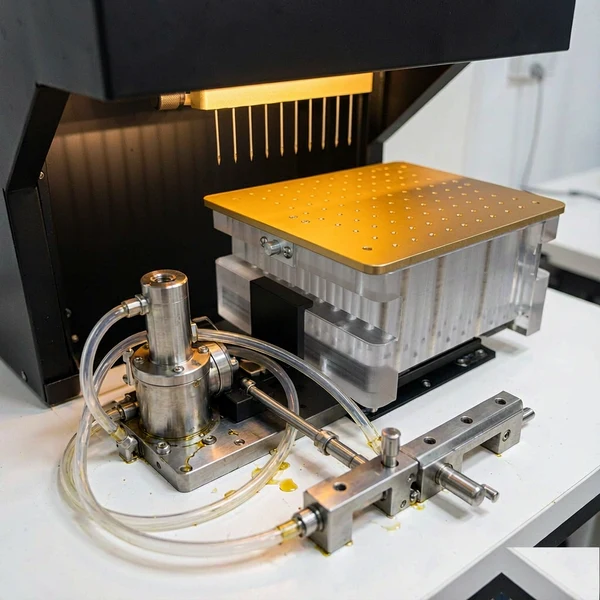
For multi-SKU production, changeover time should be included in the capacity calculation. A machine with a higher rated speed may deliver less usable daily output if cleaning and format changes require long production stops.
Information to Send Before Requesting a Machine Recommendation
A more accurate equipment recommendation begins with a defined product and process rather than a general request for a pre-roll machine.
Provide the supplier with:
- Cone or pre-roll drawings and physical samples
- Nominal length, diameter and target fill weight
- Flower preparation and particle-size information
- Infusion material and proposed operating condition
- Minimum and maximum oil dose
- Intended infusion position or pattern
- Required finished output per hour or shift
- Number of product formats and expected changeover frequency
- Available operators and planned upstream and downstream equipment
- Facility voltage, space and cleaning requirements
When some of these details are still undecided, they should be identified as open test items. That allows equipment trials to answer specific questions instead of relying on a broad statement that a machine is suitable for “most” products.
Choosing the Right Equipment
Choose cone filling equipment when dry flower loading is the main production task. Choose infusion equipment when measured oil application is the unresolved operation. If the product requires both flower filling and oil infusion, plan the machines as separate but connected stages.
The final decision should be based on sample compatibility, usable line output, changeover requirements and the ability to reproduce the intended process under defined conditions. Equipment specifications narrow the options; trials with the actual cones, flower and infusion material confirm the selection.
To discuss a suitable configuration, send Longwill your pre-roll dimensions, target flower weight, oil type and dose range, expected output and proposed production sequence. These details allow the filling and infusion stages to be evaluated against the same production plan.
Frequently Asked Questions
Can a pre-roll filling machine make infused pre-rolls by itself?
Not normally. Its main purpose is to place prepared flower into preformed cones and assist with distribution or settling. Producing an infused SKU also requires a controlled method of adding oil or concentrate. That may involve a separate infusion system and a validated sequence connecting filling, dosing, closing and inspection.
Does an infusion machine replace a cone filling machine?
No. Infusion equipment meters oil into a pre-roll, while cone filling equipment handles the dry flower. An infusion system does not automatically prepare flower, load cones, verify flower weight or close the finished units. A producer may need one or both machine types depending on which operations are already completed elsewhere.
Should infusion take place before or after cone filling?
There is no universal sequence for every formulation and pre-roll design. The appropriate stage depends on the intended oil placement, pre-roll construction, material behavior and finishing method. The proposed sequence should be tested with the actual flower, oil and hardware before production equipment is finalized.
How should pre-roll machine throughput be compared?
Compare acceptable finished units per hour under equivalent conditions. Include loading, unloading, weighing, closing, inspection, cleaning and the number of operators—not only tray capacity, nozzle count or cycle speed. Suppliers should explain the product format and process stages included in any published output figure.
What samples are required before purchasing pre-roll equipment?
Provide representative cones or pre-rolls, prepared flower and, for an infusion system, the intended oil or concentrate. The test should also specify target flower weight, oil dose, infusion position and required output. Every hardware size expected in production should be evaluated separately rather than assumed compatible.
How do cleaning requirements differ between filling and infusion machines?
Cone filling equipment primarily requires the removal of dry material from trays and filling components. Infusion equipment has a product-contact path that may include a reservoir, pump, tubing and needles. Buyers should compare access, disassembly, draining, cleaning-material compatibility and the time required between formulations.